
Mapping CORDIS projects to SDGs
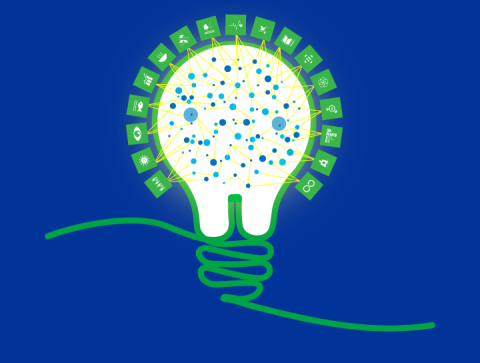
CORDIS – mapping EU-funded research projects to the Sustainable Development Goals
Results announcement (4.11.2026)
The CORDIS–SDG competition has concluded, and the final results are available on the Leaderboard.
We would like to thank everyone who showed interest in the competition, and especially all participants for the time, effort and expertise invested in developing their submissions.
Among the aspects particularly appreciated in the three winning submissions were the innovative approaches to mapping research projects to SDGs, the careful consideration and weighting of different sources of evidence, the transparency and explainability of the proposed methodologies, the traceability of individual assignments, the assessment of their reliability, the validation and reproducibility of results and the practical value of the tools developed for exploring and analysing the data.
1. Dtangle (Marc Siegrist, Jean-Marie Le Goff and Paul Bagourd)
2. Mah Talat
3. Paulo Villalobos
Congratulations to the three winners, and thank you once again to all participants for their valuable contributions!
EDP–CORDIS Evaluation Team
See the Q&A page for news from the evaluation committee.
CORDIS provides information on EU-funded research and innovation projects, including project objectives, descriptions, keywords, EuroSciVoc categories, deliverables and other project-related content.
The United Nations Sustainable Development Goals provide a widely used framework for understanding societal, environmental and economic impact. EU Vocabularies provides access to a structured SDG taxonomy, including more specific narrower concepts. The challenge is to use this taxonomy to identify which SDGs are addressed by CORDIS projects and, where possible, to map them to the most precise relevant concepts.
Participants are invited to design a method for linking CORDIS projects to SDG concepts. A project may contribute to more than one SDG. The mapping must therefore support multiple labels and must include an explanation of why each label was assigned.
The solution may use any relevant CORDIS project fields, such as:
- EuroSciVoc categories;
- project keywords;
- objective (coming from the eGrant agreement);
- project description (editorial content);
- project deliverables;
- other available project-related content.
Participants should not only produce a mapping table. They should also analyse and present the results, for example by showing which SDGs are most frequently linked to CORDIS projects, which are less represented, how SDG relevance varies by programme, topic, country, organisation type, project duration or scientific field, or where the mapping is uncertain.
As an optional extension, participants may also compare the SDG mapping with the current European Commission Strategic priorities authority table, where relevant.
Objective
Create a transparent and explainable method to map CORDIS projects to SDG concepts, using the EU Vocabularies SDG taxonomy as the reference framework.
The best submissions will combine sound data analysis, good use of controlled vocabularies, clear reasoning and effective presentation.
Expected output
Participants should submit:
- A notebook explaining the methodology, data preparation, mapping logic and results.
- A project-to-SDG mapping table, including:
- CORDIS project identifier;
- project title;
- assigned SDG concept(s);
- narrower SDG concept(s), where applicable;
- confidence score or confidence level;
- short explanation or evidence for each assignment;
- source field(s) used for the assignment.
- Visualisations showing the main findings.
- A short discussion of limitations, uncertain cases and possible improvements.
- A working web-based prototype.
- A description document on what you did and why your solution is the best.
Data
Participants are encouraged to use the datasets made available through data.europa.eu, although equivalent information may also be obtained directly from CORDIS.
Relevant fields may include, but are not limited to:
- project acronym;
- project title;
- objective;
- project description;
- EuroSciVoc category;
- keywords;
- programme;
- topic;
- start and end dates;
- participating organisations;
- countries;
- deliverables and other project outputs, where available.
The reference taxonomy is the Sustainable Development Goals taxonomy in EU Vocabularies:
Participants should use the taxonomy structure and prefer the most precise relevant concept. Where a narrower concept is available and applicable, it should be used instead of assigning only the top-level SDG.
Optional reference authority table:
Task
For each selected CORDIS project, identify one or more relevant SDG concepts.
A good solution should:
- support multiple SDG assignments per project;
- use narrower SDG concepts where possible;
- explain the reasoning behind each assignment;
- distinguish strong, weak and uncertain matches;
- avoid assigning SDGs only on the basis of isolated keywords;
- show how the method deals with ambiguous or cross-cutting projects;
- provide reusable outputs.
Methodological guidance
- Participants are free to choose their own approach for linking CORDIS projects to SDG concepts.
- The proposed method should be transparent, explainable and reproducible. Participants should clearly describe how SDG assignments were generated, how confidence was assessed and how uncertain or ambiguous cases were handled.
- If artificial intelligence, machine learning or other automated methods are used, the solution must explain how the method works and how the results were validated. Black-box mappings without explanation will not be considered sufficient.
- Participants must not process personal data.
- Participants should document any external datasets, tools or models used.
Visualisation
Participants are encouraged to present their findings through appropriate visualisations that help explain the mapping results, highlight patterns in the data and communicate uncertainties where relevant.
Evaluation criteria, submission format and indicative timeline: please see under Rules.
Awards
The best submissions will receive gold, silver and bronze certificate recognition on the competition platform.
Key terms
| Term | Definition |
| CORDIS | The Community Research and Development Information Service (CORDIS) is the European Commission’s primary source of information on EU-funded research and innovation projects and their results. |
| EDP | The European Data Portal is a service that provides access to open data published by public administrations across Europe. |
| EuroSciVoc | The multilingual taxonomy of scientific fields used by the Publications Office of the European Union to classify research topics. |
| EU Vocabularies | A collection of controlled vocabularies and authority tables maintained by the Publications Office of the European Union. |
| Multi-label classification | A classification approach where a project may be assigned to multiple concepts simultaneously. |
| Narrower concept | A more specific concept within a hierarchical taxonomy. Participants should prefer the most precise applicable concept whenever possible. |
| Project deliverable | A project output submitted during the lifetime of a project. Deliverables may provide additional evidence for classification. |
| Project description | Editorial content prepared for CORDIS, providing a more accessible description of the project and its context. |
| Project objective | The project summary extracted from the eGrant agreement and published in CORDIS. It describes the aims and expected outcomes of the project. |
| SDG | Sustainable Development Goal. One of the goals and targets defined by the United Nations 2030 Agenda for Sustainable Development. |
| SDG taxonomy | The EU Vocabularies concept scheme representing the Sustainable Development Goals and their more specific concepts. This is the reference taxonomy for the challenge. |
| Strategic priority | Controlled vocabulary describing the strategic priorities of the European Commission. Participants may optionally use it for comparison with SDG mappings. |
Evaluation criteria, submission format and indicative timeline
Results announcement (4.11.2026)
The CORDIS–SDG competition has concluded, and the final results are available on the Leaderboard.
We would like to thank everyone who showed interest in the competition, and especially all participants for the time, effort and expertise invested in developing their submissions.
Among the aspects particularly appreciated in the three winning submissions were the innovative approaches to mapping research projects to SDGs, the careful consideration and weighting of different sources of evidence, the transparency and explainability of the proposed methodologies, the traceability of individual assignments, the assessment of their reliability, the validation and reproducibility of results and the practical value of the tools developed for exploring and analysing the data.
1. Dtangle (Marc Siegrist, Jean-Marie Le Goff and Paul Bagourd)
2. Mah Talat
3. Paulo Villalobos
Congratulations to the three winners, and thank you once again to all participants for their valuable contributions!
EDP–CORDIS Evaluation Team
See the Q&A page for news from the evaluation committee.
Evaluation criteria
Submissions will be evaluated according to the following criteria:
1. Correct use of the SDG taxonomy
The solution uses the EU Vocabularies SDG taxonomy correctly and assigns the most precise relevant concepts where possible.
2. Quality of the mapping
The assigned SDGs are relevant, well justified and not based on superficial keyword matching only.
3. Explainability
The notebook clearly explains why a project was linked to a given SDG. The reasoning is understandable for non-technical users.
4. Reusability
The method and output can be reused or adapted by CORDIS or EDP after the challenge.
5. Data handling
The solution uses CORDIS data appropriately, documents preprocessing steps and handles missing or inconsistent data transparently.
6. Visualisation and communication
The results are presented clearly through tables, charts or other visualisations.
7. Awareness of limitations
The submission identifies uncertain cases, possible biases and limitations of the method.
8. A working web-based prototype
This prototype helps the work of the evaluators.
9. A description document on what you did and why your solution is the best
A short summary of why you think your solution should be awarded.
Submission format
Each submission should include:
- a notebook;
- a mapping table in CSV or Excel format;
- any supporting files needed to reproduce the results;
- a short summary of the approach and main findings;
- a working web-based prototype;
- a description document explaining why your solution is the best.
Indicative timeline
- Launch of the challenge: 1 August 2026
- Q&A period (extended): until 21 September 2026
- Submission deadline: 30 September 2026, 23:59 CEST (UTC+2)
- Evaluation period: 1–30 October 2026
- Results announced: 4 November 2026
Q&A
Results announcement (4.11.2026)
The CORDIS–SDG competition has concluded, and the final results are available on the Leaderboard.
We would like to thank everyone who showed interest in the competition, and especially all participants for the time, effort and expertise invested in developing their submissions.
Among the aspects particularly appreciated in the three winning submissions were the innovative approaches to mapping research projects to SDGs, the careful consideration and weighting of different sources of evidence, the transparency and explainability of the proposed methodologies, the traceability of individual assignments, the assessment of their reliability, the validation and reproducibility of results and the practical value of the tools developed for exploring and analysing the data.
1. Dtangle (Marc Siegrist, Jean-Marie Le Goff and Paul Bagourd)
2. Mah Talat
3. Paulo Villalobos
Congratulations to the three winners, and thank you once again to all participants for their valuable contributions!
EDP–CORDIS Evaluation Team
For more information check Overview and Rules pages.
Message of 26.10.2026 from the organisers
Thank you for your interest in the CORDIS–SDG challenge.
This was the first competition hosted on the European Data Portal’s new competition platform. Despite thorough testing before its launch, we encountered several technical issues that affected its management.
We received six submissions in total: five through the platform and one by email. On the final day of the submission period, one participant reported difficulties with EU Login that prevented him from submitting his entry through the platform. We therefore accepted his submission by email as an exception, as it was received within the original deadline. This entry was subsequently added to the platform under the participant’s name to ensure that all six submissions would be represented on the platform.
The technical difficulties also prevented us from publishing updates on the platform as originally intended. We apologise for the lack of communication during this period.
The evaluation of all six submissions has been completed. Some scores are already visible on the platform, while the remaining results are expected to be published by the end of October, as originally planned.
The winners will be officially announced on 4 November 2026 as planned. We would like to thank all participants for their efforts and the high quality of their submissions.
Stay tuned for further updates and new challenges on the platform!
CORDIS–EDP Evaluation Committee
________________________________
Q0: How to submit a notebook?
A0: In order to submit a notebook to the competition, the user profile and selected notebook must be made public. For help with creating a new notebook visit the documentation site https://dataeuropa.gitlab.io/data-provider-manual/competition-platform/.
Q1: Which file types and sizes are supported for solution submission?
A1: Currently the portal supports unlimited number of files in the solutions field with a 5 MB each size limit. Currently supported types are: csv, tsv, xls, xlsx, ods, txt, doc, docx, rtf, md, json, ndjson, geojson, yaml, xml, png, jpg, tiff, bmp, gif, py, r, ipynb, html, pdf, pptx, ppt, odp, key. In case a larger file or unsupported file is necessary to demonstrate your solution, you can host it externally and paste a link to it in the solution body field.
Q2: Eligibility: Is participation open to anyone, or is it restricted to a particular group, e.g current or former CORDIS-funded researchers.
A2: Participation is open to anyone. It is not restricted to current or former participants in CORDIS-funded projects.
Q3: Dataset scope: The brief references CORDIS data generally without specifying a particular framework programme. Is there a preferred or expected dataset to use – for example, Horizon Europe (2021–2027) only – or is any CORDIS programme/dataset acceptable, including earlier ones such as H2020 or FP7?
A3: The challenge is not restricted to a particular framework programme. Participants may use CORDIS data from Horizon Europe, Horizon 2020, FP7 or other framework programmes covered by CORDIS. They may focus on one programme or use data from several programmes, depending on their chosen approach.
Q4: Submission: Could you clarify how and where the final submission should be delivered (e.g. an upload portal, email, a GitHub repository), and whether there are any strict format or file-size limits?
A4: The final submission should be uploaded via the competition platform by 30 September 2026, 23:59 CEST (UTC+2). It should include the items listed under ‘Submission format’ in the Rules. Format limited only for the mapping table: CSV or Excel. No size limit.
Q5: AI/LLM tools: The brief notes that participants should document any external datasets, tools or models used. Could you confirm whether the use of commercial LLM APIs (for example, to help generate explanations for SDG assignments) is acceptable, or whether fully open/local models are expected given the emphasis on reproducibility?
A5: The current text allows participants to choose their own approach and explicitly refers to the use of AI, machine learning and other automated methods, provided that the method is transparent, explainable and reproducible. It also requires participants to document any external datasets, tools or models used. It does not explicitly state whether commercial LLM APIs are acceptable – but it would make the reproducibility difficult or even impossible.
Q6: Taxonomy depth. The EU Vocabularies SDG taxonomy (http://data.europa.eu/sdg) includes 17 goals, 169 targets, and several hundred indicator/series concepts. When the brief asks for “the most precise relevant concept” and “narrower SDG concept(s)”, should mappings stop at target level, or are indicator-level concepts also expected?
A6: Participants should use the most precise relevant concept available in the EU Vocabularies SDG taxonomy. The mapping does not have to stop at target level. Indicator-level or other narrower concepts may also be used where they are relevant and can be meaningfully supported by the CORDIS project information. However, participants are not expected to assign a narrower concept simply because one exists: the level of precision should be justified by the available evidence.
Q7: Corpus cut-off. CORDIS dumps are updated monthly. Is there a preferred snapshot (for example a stated dump date) so that mappings remain comparable across participants?
A7: There is no mandatory CORDIS snapshot or cut-off date for the challenge. As CORDIS data are updated regularly, participants should clearly document the dataset(s) used, including the date of retrieval or snapshot where applicable, so that their results can be understood and reproduced. Participants are not expected to use exactly the same snapshot.
Q8: Licence for reuse. The evaluation criteria mention reusability by CORDIS or the European Data Portal. Is a specific open licence preferred for the mapping table, notebook and prototype (for example CC-BY or EUPL)?
A8: No specific open licence is required for submissions. However, as reusability is one of the evaluation criteria, participants are encouraged to use an appropriate open licence and to state clearly the licence applying to their submitted code, data and documentation. Any third-party data, tools, libraries or other resources used must, of course, be used in accordance with their applicable licences and conditions.
Q9: Prototype hosting. The Rules require a working web-based prototype. Should it be publicly hosted at submission time (URL), or is it sufficient to provide code that the evaluators can run locally?
A9: The working web-based prototype should be accessible to the evaluators at submission time, preferably through a URL included in the submission. Providing source code alone that requires the evaluators to install dependencies and run the prototype locally would not fulfil the purpose of the requested working web-based prototype. Supporting source code and instructions may additionally be included to facilitate reproducibility.
Q10: Can teams participate in the competition, or are submissions limited to individuals?
A10: Teams are welcome to participate in the competition. However, due to the format of the certificates, only one name can appear on a certificate. Teams should therefore indicate whether, in the event of ranking among the top three submissions, they would like the certificate to be issued in the name of one team member or under their shared team name.
Q11: Terms, intellectual property and publication. Beyond the evaluation criteria published on the challenge page, is there a full terms & conditions document for the competition? Specifically: who holds the rights to submitted materials, under what licence may CORDIS or the European Data Portal reuse the method and mapping, and will submissions (or winning submissions) be published publicly after the challenge?
A11: Participants retain full ownership of their submissions and all associated rights. The winning submissions themself will not be published. Only the individual participants or teams behind the winning applications will be featured on the European Data Portal in order to promote the winners.
Q12: Use of large language models. The challenge page notes that commercial LLM APIs may make reproducibility difficult. Could you clarify whether: (a) a method built on a commercial LLM API is acceptable if fully documented (model, version, prompts, parameters), and (b) whether a method using an open-weight model (publicly downloadable weights, version-pinned, reproducible on any infrastructure) accessed through a hosted inference provider satisfies your reproducibility expectations?
A12: All LLMs, whether open or closed, may be used for the challenge. The key requirement is not the type of LLM used, but that the methodology is sufficiently transparent and reproducible.
For a commercial LLM API, participants should document the model, version, prompts and parameters used. However, it should be noted that full reproducibility may have inherent limitations, as the provider may update or modify the model or service, and the same model/version may no longer be available later. Even with identical prompts and parameters, the results may therefore not always be reliably reproducible.
An open-weight model accessed through a hosted inference provider is equally acceptable. Participants should specify the exact model and version used and document the methodology and relevant settings in sufficient detail to allow the approach to be reproduced.
Q13: Personal data in CORDIS free text. The challenge states that participants must not process personal data, while project objectives/descriptions are suggested as possible inputs. Some public CORDIS free-text fields may incidentally contain researcher names, lab names or short biographical references. May these public objective/description fields be processed if dedicated personal/contact fields are excluded, or should incidental personal references also be removed first? May short excerpts from such public text be shown as evidence in the web prototype after removing unnecessary personal references?
A13: If personal names can be avoided, it is of course better, but the data is public.
Q14: Human validation. For an automated system covering thousands of projects, is validation on a carefully selected, independently human-reviewed sample, followed by automated checks and post-run spot audits, acceptable? Or is every submitted project-to-SDG assignment expected to be manually reviewed?
A14: Validation on a carefully selected, independently human-reviewed sample, followed by automated checks and post-run spot audits is acceptable.
Q15: Ground truth. As there appears to be no official gold-standard project-to-SDG dataset, is a documented human-annotation protocol on a representative holdout sample an acceptable validation method? Is one documented reviewer sufficient, or is agreement between multiple reviewers expected/preferred?
A15: Given the size, documented human-annotation protocol on a representative holdout sample is acceptable, but multiple reviewers (and associated metrics like Cohen’s 𝜅) are preferable
Q16: Confidence. Is it acceptable to report qualitative, empirically defined levels such as strong / weak / uncertain, provided the criteria and validation process are documented, instead of presenting uncalibrated model scores as probabilities?
A16: Qualitative, empirically defined levels such as strong / weak / uncertain, provided the criteria and validation process are documented are acceptable, although relying on the state of the art is preferrable
Q17: Taxonomy depth. The Q&A confirms that indicator-level or narrower concepts may be used when supported by evidence. Does this also include Series concepts below Indicators in the EU SDG taxonomy, and should Series-level assignments only be used when project evidence specifically supports that exact measurement concept?
A17: Please refer to the answer already given in Q/A 6 above.
Q18: Contribution versus achieved outcome.
When assessing whether a research project contributes to an SDG target, should we evaluate whether the project provides a substantive mechanism/pathway towards the target, or should the project already demonstrate the final outcome described by the target?
For example, if a project develops a malaria vaccine, would vaccine R&D itself constitute a substantive contribution to Target 3.3, or should evidence of an actual reduction in malaria prevalence be required?
Similarly, if a target contains several parallel elements, should a project need to satisfy all of them, or may it contribute strongly to one genuine component of the target?
Our current interpretation is to distinguish between:
— essential scope/qualifiers, which must be supported for the claimed relationship; and
— downstream outcomes, which a research project may substantively contribute towards without having already achieved.
We would especially appreciate confirmation of whether this interpretation is consistent with the intended meaning of “contribution” in the challenge.
A18: We would say that interpreting what constitutes a meaningful ‘contribution’ is, to some extent, part of the challenge itself. We are interested in seeing how participants approach and justify this methodological question, rather than prescribing an exhaustive interpretation in advance.
In the example given, we would consider vaccine R&D itself to constitute a substantive contribution to Target 3.3; the project would not need to demonstrate an actual reduction in malaria prevalence. Similarly, where a target contains several distinct elements, a project may contribute meaningfully to one of them without necessarily addressing all of them, provided that the claimed relationship is sufficiently supported by the available project information.
Q19: Projects with no justified mapping. Is it acceptable for the methodology to conclude that a CORDIS project has no sufficiently supported SDG assignment?
We prefer allowing a genuine “no justified mapping” result rather than forcing every project into at least one SDG based only on broad thematic similarity, but would like to confirm that this is consistent with the task.
A19: We agree. Not all CORDIS projects will necessarily have a sufficiently supported relationship with an SDG. A ‘no justified mapping’ result is therefore preferable to forcing an assignment based only on broad thematic similarity.
Q20: Parent and narrower concepts. You previously clarified that Indicator-level or other narrower concepts may be used where meaningfully supported.
If a narrower concept is assigned, should the final mapping table normally contain only the most precise concept, with its parent Target/Goal derived through the taxonomy hierarchy, or should both the narrower concept and its parent concepts be recorded as separate assignments?
This distinction matters particularly when aggregating project counts and funding, since recording both could otherwise create double counting.
A20: Where a narrower concept is assigned, there is no need to record its broader concepts as separate assignments. This follows the normal hierarchical structure of controlled vocabularies: the broader concepts can be derived through the taxonomy hierarchy. Recording each level as a separate assignment could also lead to double counting when aggregating projects or funding.
This approach is consistent with the broader/narrower hierarchical relationships defined in ISO 25964-1 and represented in W3C SKOS through skos:broader / skos:narrower and their transitive hierarchy (https://www.w3.org/TR/skos-reference/).
| Rank | Username | Organization | Score | Entries | Last entry |
|---|---|---|---|---|---|
| 1 |  | CORDIS (Community Research and Development Information Service) | 0.92592 | 1 | 2026-09-30 |
| 2 | CORDIS (Community Research and Development Information Service) | 0.88426 | 1 | 2026-09-30 | |
| 3 | CORDIS (Community Research and Development Information Service) | 0.87500 | 1 | 2026-10-23 | |
| 4 | CORDIS (Community Research and Development Information Service) | 0.83333 | 1 | 2026-09-13 | |
| 5 | CORDIS (Community Research and Development Information Service) | 0.72685 | 1 | 2026-09-27 | |
| 6 | CORDIS (Community Research and Development Information Service) | 0.52315 | 1 | 2026-09-30 |
| Rank | Username | Organization | Score | Entries | Last entry |
|---|---|---|---|---|---|
| 1 | | CORDIS (Community Research and Development Information Service) | 0.92592 | 1 | 2026-09-30 |
| 2 | CORDIS (Community Research and Development Information Service) | 0.88426 | 1 | 2026-09-30 | |
| 3 | CORDIS (Community Research and Development Information Service) | 0.87500 | 1 | 2026-10-23 | |
| 4 | CORDIS (Community Research and Development Information Service) | 0.83333 | 1 | 2026-09-13 | |
| 5 | CORDIS (Community Research and Development Information Service) | 0.72685 | 1 | 2026-09-27 | |
| 6 | CORDIS (Community Research and Development Information Service) | 0.52315 | 1 | 2026-09-30 |