
Spotting disinformation: How confident are Europeans in a digital age?
Exposure, confidence and fact-checking behaviours across EU Member States
Misinformation versus disinformation Although these terms are sometimes used interchangeably, the EU usually distinguishes between them. According to the Council of the European Union, while misinformation is usually spread without the intention of causing harm, disinformation is the sharing of false information with malicious intent, for instance, to deceive and influence voters before an election. |
Living in the 21st century, many EU citizens are familiar with the concept of disinformation. The European Commission considers this emergent phenomenon a threat to democracy, for example when foreign powers organise disinformation campaigns to interfere with European democratic elections. As a result, there are numerous EU policies to tackle disinformation, such as the proposed European democracy shield. This initiative, among other things, reinforces cooperation with social media platforms to combat disinformation more efficiently.
How do most Europeans react when faced with the uncertainty of whether they can believe what they read online? This data story uncovers which Member States report encountering disinformation more often, how EU citizens rate their ability to spot disinformation, and what common tactics they employ to do so.
Considering confidence versus exposure
As the graph below indicates, disinformation has become increasingly common in our lives, and not all European citizens feel confident they can recognise it.
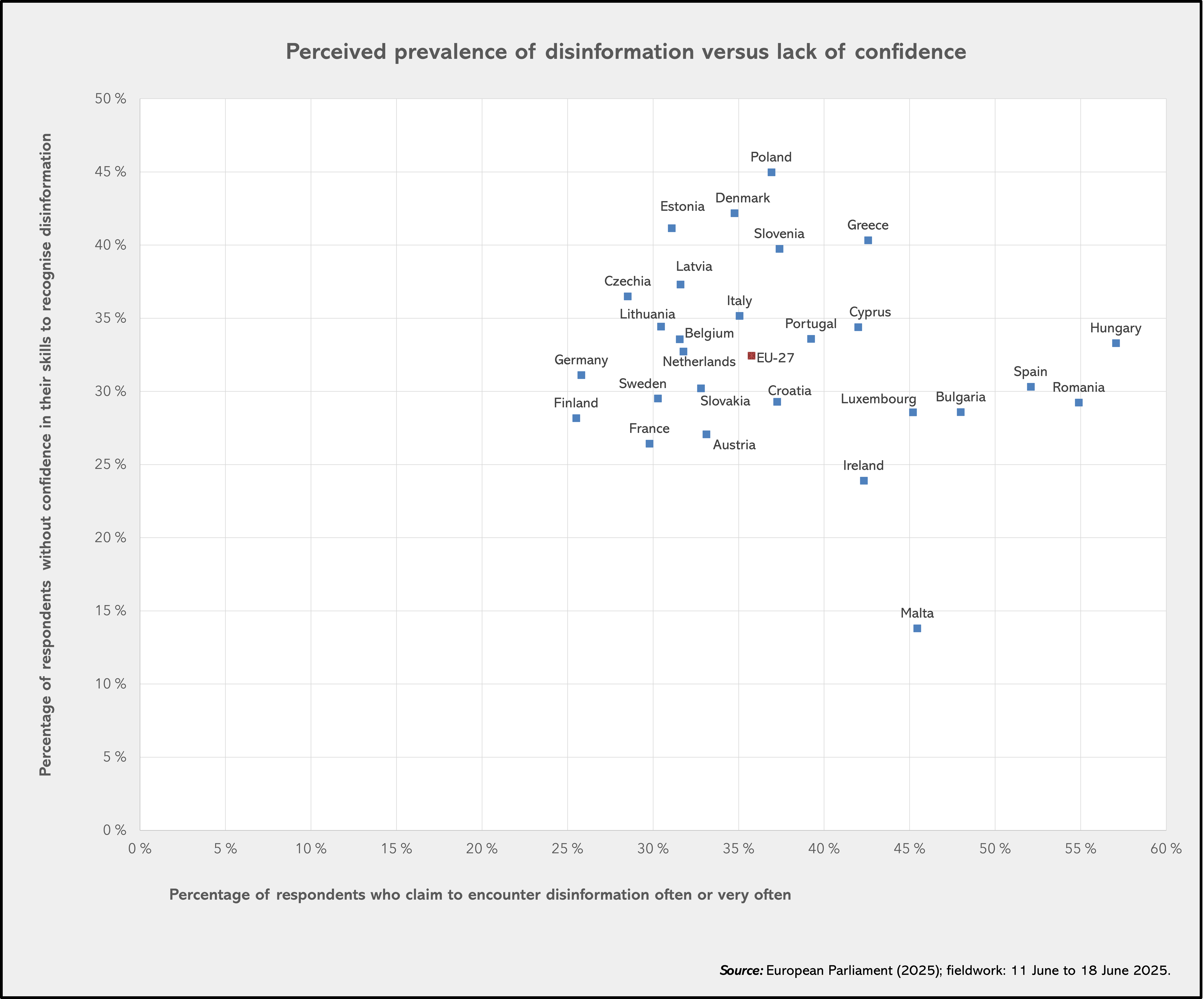
Figure 1: Perceived prevalence of disinformation versus lack of confidence
Source: European Data Portal
Answering the question ‘How often do you think that you have been personally exposed to disinformation and fake news over the past 7 days?’, 36 % of Eurobarometer respondents claim that this happens often or very often. In the same survey, almost a third of participants explain that they do not ‘feel confident that [they] can recognise disinformation when [they] encounter it’. However, responses vary widely across the EU. For instance, in Finland only 26 % of respondents say they encounter disinformation frequently, while this number rises to 57 % in Hungary. Similarly, less than 15 % of Maltese respondents lack the confidence to recognise disinformation, compared to 45 % in Poland.
Several of the Member States with high perceived levels of disinformation are in southern or eastern Europe. Furthermore, the same states tend to have fewer people lacking confidence in their skills to recognise disinformation. Strikingly, similar levels of confidence can be noted in Finland and Germany, where the lowest proportion of participants claims to encounter disinformation frequently. Despite these observations, there appears to be no strong geographic correlation.
Reactions to potential disinformation vary
Reactions to disinformation vary widely, and there are different ways to determine whether information online is true or false. This section examines the measures EU citizens use most frequently and draws on scientific research to highlight what to keep in mind when doing such checks.
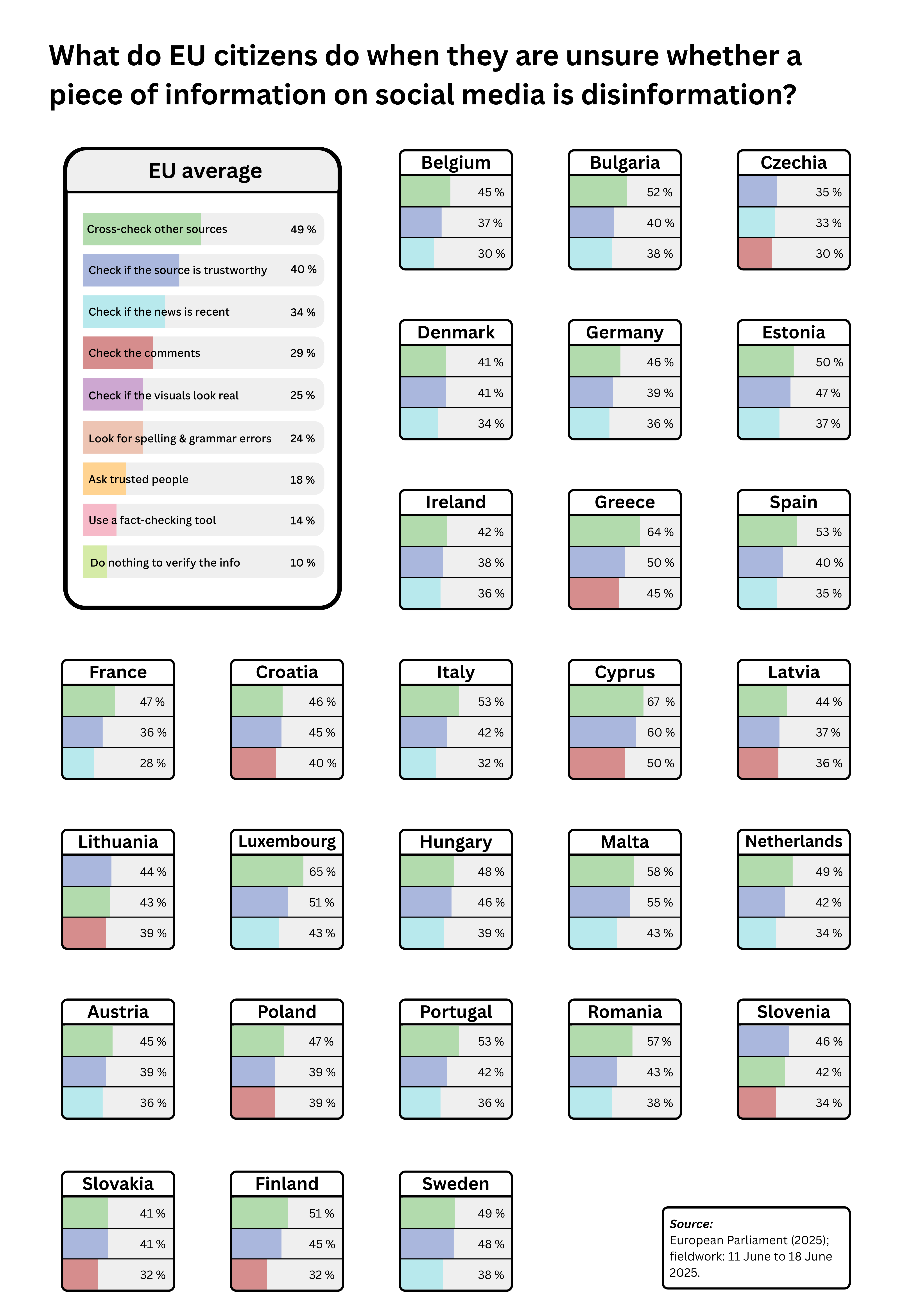
Figure 2: What do EU citizens do when they are unsure whether a piece of information on social media is disinformation?
Source: European Data Portal
As shown in figure 2 above, almost half of respondents cross-check information with other sources to verify its authenticity. This trend is also evident when examining Member States individually, where it is the most frequently used strategy in all but three. When checking information this way, it is important to use trustworthy sources and not overly rely on artificial intelligence. Research shows that large language models like ChatGPT still sometimes struggle with context and nuance, potentially producing convincing responses that are not entirely accurate (see Simon et al., 2024, p. 19; Danry et al., 2024, p. 2).
Approximately 40 % of EU citizens check whether the source of a post is reliable. In Czechia, Lithuania, and Slovenia, this was even the most popular tactic. Slightly over a third of respondents also consider the recency of news, making sure the information is not outdated.
A final strategy which reaches the top three in ten Member States and is performed by 29 % of survey participants overall is browsing the comment section. Research by Stöckel et al. (2025) confirms that comments calling a post untrue influence social media users when they are deciding whether to believe information or not. As a result, when you spot false information, it can be helpful for others if you leave a corrective comment. However, care should be taken here, because this phenomenon can also be observed in reverse: a true post may appear less believable because comments criticise it. The research team therefore advises users to not solely focus on the comment section when evaluating information online and to double-check your own facts before leaving a critical comment.
Strong data and media literacy skills as a defence against mis- and disinformation
The survey results highlight that Europeans navigate online information with varying degrees of confidence. Broader research links these abilities to digital and media literacy skills, including understanding how data and visualisations can be used or misused. Open resources such as the data.europa academy offer background material on these topics, including introductions to data visualisation and examples of misleading charts. Moreover, the EU’s five-minute game Vote for Turtle offers a playful yet educational introduction to disinformation.
Sources
Danry, V., Pataranutaporn, P., Groh, M. and Epstein, Z. (2025), ‘Deceptive explanations by large language models lead people to change their beliefs about misinformation more often than honest explanations’, in: Yamashita, N., Evers, V., Yatani, K., Ding, X., Lee, B. et al. (eds), CHI’ 2025 – Proceedings of the 2025 CHI Conference on Human Factors in Computing Systems, Association for Computing Machinery, New York, NY, United States of America, 25 April 2025, pp. 1–31. https://doi.org/10.1145/3706598.3713408
European Parliament (2025), ‘Flash Eurobarometer FL014EP: Social Media Survey 2025’, version v1.00, 16 October 2025, accessed 26 January 2026, http://data.europa.eu/88u/dataset/s3592_fl014ep_eng.
Simon, F. M., Fletcher, R. and Nielsen, R. K. (2024), ‘How generative AI chatbots responded to questions and fact-checks about the 2024 UK general election’, Reuters Institute for the Study of Journalism, 19 September 2024, https://doi.org/10.60625/risj-c4vm-e367.
Stöckel, F., Stöckli, S., Lyons, B. A., Kroker, H. and Reifler, J. (2025), ‘The power of the crowd: How the public can both spoil and improve social media as a source of information’, Elements in Experimental Political Science, Cambridge University Press, 6 November 2025, https://doi.org/10.1017/9781009677165.