
Closing the gap: gender equality in Europe
Insights from the Gender Equality Index: work patterns and income gaps
How differently do men and women experience life in Europe today?
Over recent decades, the roles of men and women in Europe have shifted. More women participate in the labour market, and more men share responsibilities at home. Yet clear differences in gender roles remain in European societies, from who reaches positions of power to how household tasks are shared. This underlines why the EU continues to support progress towards gender equality through its 2026–2030 gender equality strategy.
In this context, this data story uses open data – mainly from the European Institute for Gender Equality (EIGE) and the European Data Portal – to explore how gender inequalities continue to shape life in Europe and what progress still lies ahead.
What does the Gender Equality Index reveal about differences between men and women?
Who holds power, who earns more and who carries the greater share of unpaid work? Across Europe, these questions often still have gendered answers.
EIGE’s Gender Equality Index provides a structured way to measure these differences across key areas of social and economic life. Figure 1 shows how EU Member States perform across the index’s six domains – work, money, knowledge, time, power and health – on a scale from 1 to 100 (with a score of 100 representing complete parity between men and women). With an EU average score of 63.4, the data shows that equality between men and women is far from achieved.
Looking across the domains of the index at the EU level, it becomes clear where men and women experience the biggest differences. ‘Power’ (40.5) is the lowest scoring domain, illustrating how difficult it remains for women to access political influence, senior management and other leadership positions across Europe. ‘Knowledge’ (57.4) and ‘time’ (65.0) show that women are still encouraged to remain in traditionally female fields of study, such as those linked to care or education roles, and tend to carry more unpaid responsibilities. ‘Work’ (69.3) and ‘money’ (73.9) reflect long-standing patterns, with women generally earning less and being less present in better-paid or senior roles. ‘Health’ (86.2) is the strongest domain, though women still face more unequal outcomes in healthcare than men.
The differences between Member States are just as striking. Sweden (73.7), France (73.4) and Denmark (71.8) rank at the top of the index, reflecting more equal outcomes for women overall. At the lower end, Cyprus (47.6), Hungary (51.6) and Czechia (53.2) show wider gender gaps. Much of this spread comes from the ‘power’ domain, which differs far more between countries than the other domains.
This means that countries with higher overall scores on the index tend to have more women in senior positions, while those at the lower end have far fewer women in influential roles. This gap also points to where change can matter the most: ensuring that women are equally represented in decision-making roles.
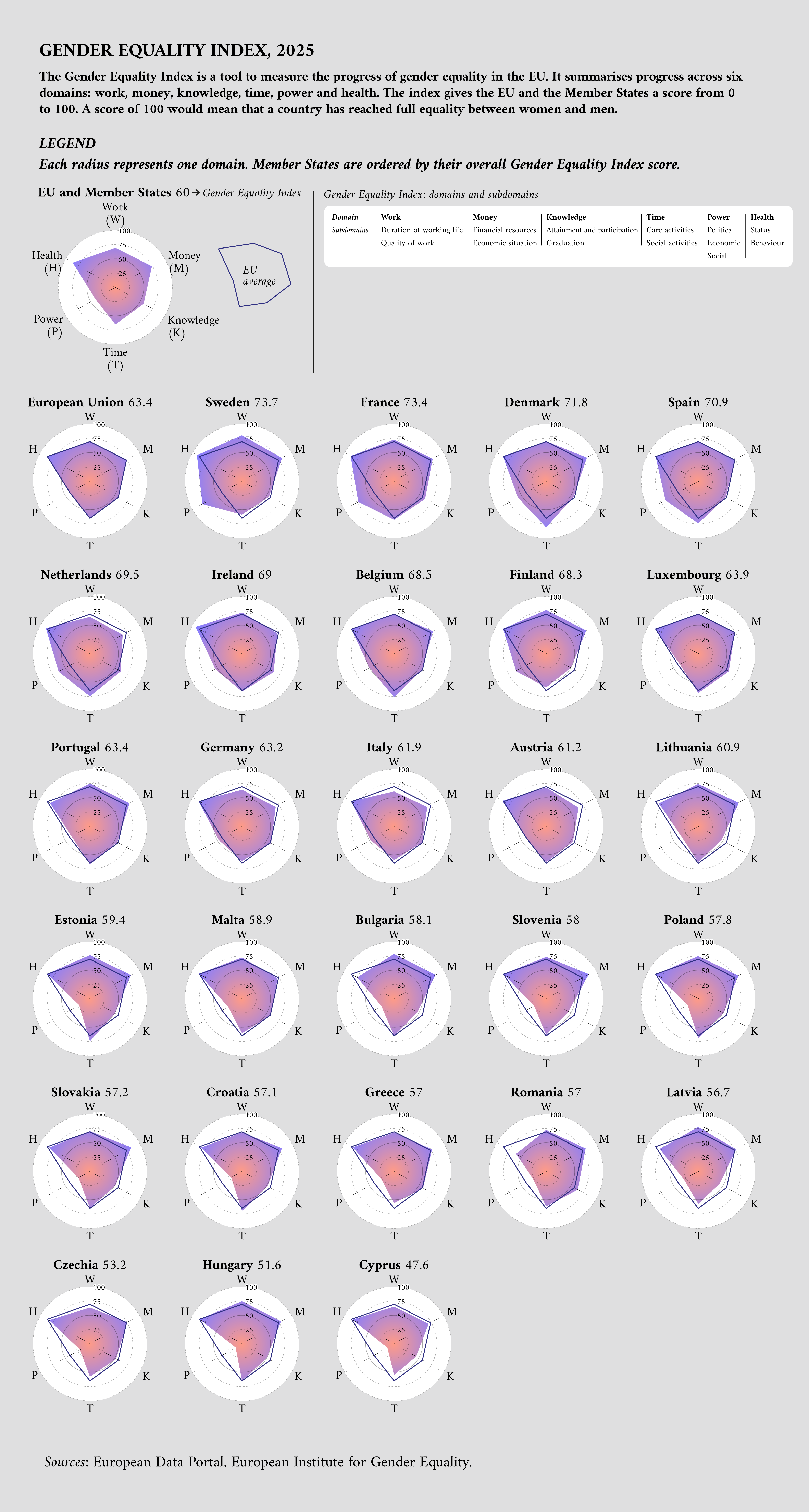
Figure 1: Gender Equality Index by domain in the EU
Sources: European Institute for Gender Equality, European Data Portal.
Who works more part-time in the EU – women or men?
When looking at part-time employment, the findings from the ‘work’ and ‘power’ domains of the Gender Equality Index become clearer. Working reduced hours can offer flexibility but also limit income and career progression. Women tend to work part-time far more often than men, largely because they shoulder more unpaid care work at home, as reflected in EIGE’s 2024 CARE survey.
Figure 2 shows how part-time employment developed across the EU between 2009 and 2024. Throughout this period, the gap between men and women remained substantial: even though part-time rates for men and women have shifted slightly over the past 15 years, women still worked part-time more than three times as often as men in 2024 – a pattern that has changed little since 2009. In 2024, 28 % of women worked part-time, compared with 8 % of men.
Part-time employment patterns also differ significantly across Member States. In 2024, the Netherlands (60 %) recorded by far the highest share of part-time work for women, followed by Austria (51 %) and Germany (48 %). In these three countries, women’s part-time rates are several times higher than those of men. By contrast, Bulgaria (2 %) and Romania (4 %) showed comparatively lower levels of part-time employment for women, with similar rates for men.
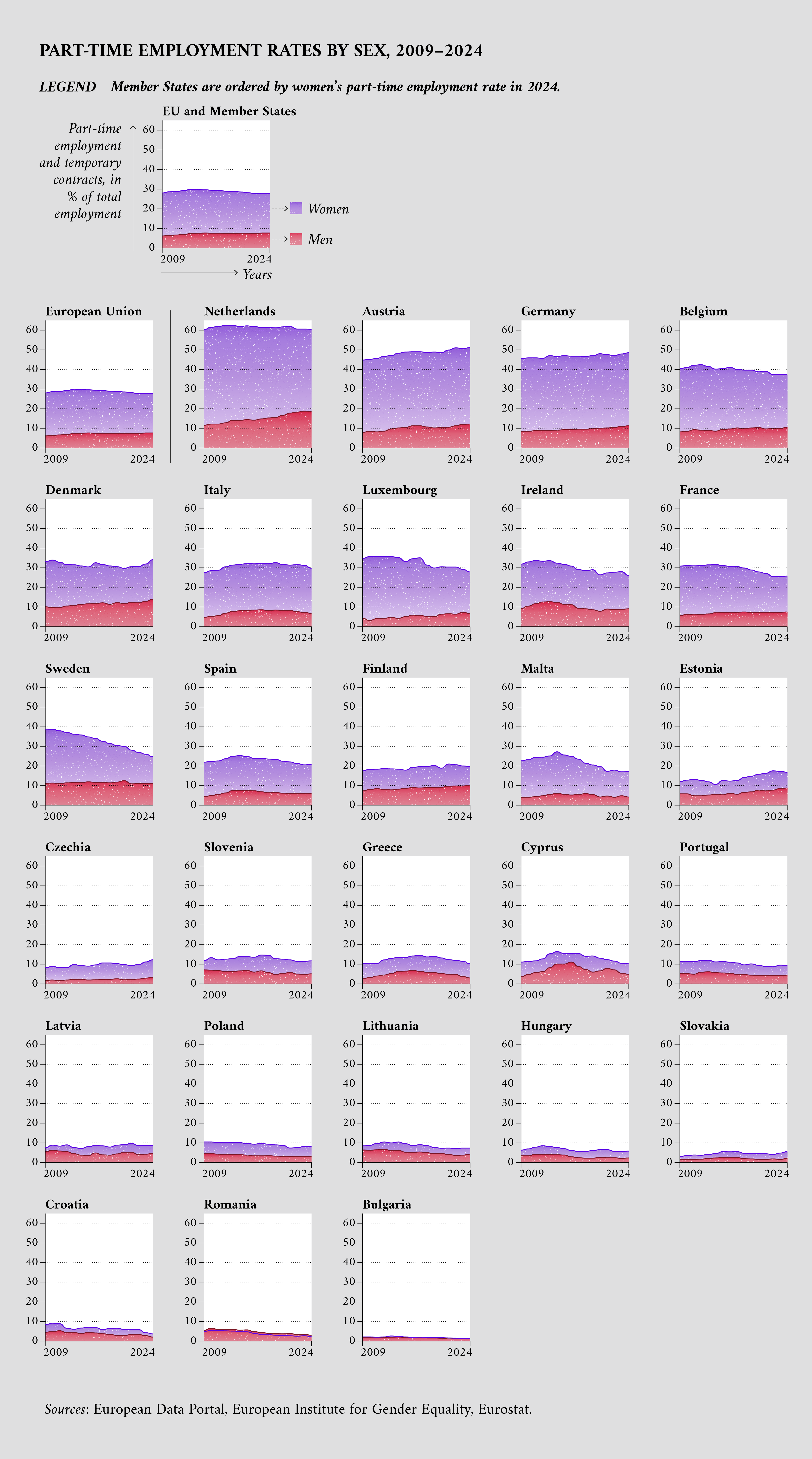
Figure 2: Part-time employment rates by sex in the EU
Sources: European Institute for Gender Equality, European Data Portal, Eurostat.
The data shows that part-time employment remains strongly gendered across the EU, with much higher rates in western Europe and much lower rates in central and eastern Europe. According to the CARE survey, women continue to adjust their working hours more often than men in response to care responsibilities, a pattern that affects earnings, work opportunities and ultimately contributes to widening income gaps (see section below).
How do income gaps between men and women change over working life and into retirement?
Regardless of the extent of part-time versus full-time work, men still tend to earn more than women across the EU, and these differences add up over a lifetime. It stands to reason that lower salaries, part-time work and interrupted careers translate into smaller pensions later in life for many women. But how large are the gaps between men and women of working age and those who have already retired?
Figure 3 presents the mean income levels for men and women aged 18 to 64 (working age) and aged 65 and over (retired age) across the EU, along with the income gaps between them. Among people aged 18 to 64, the gap is relatively modest at the aggregated EU level, with women earning around 3 % less than men on average. Among those aged 65 and over, however, the difference between men and women widens substantially to around 11 %.
A similar pattern appears in many Member States. For example, in Estonia and Austria, gaps of 1 % and 3 % during working age widen sharply to around 15 % and 19 %, respectively, at retired age. Even where earnings seem nearly equal earlier in life, disparities often become much more visible in retirement. This means that many women reach retirement age with a significantly lower pension income to rely on.
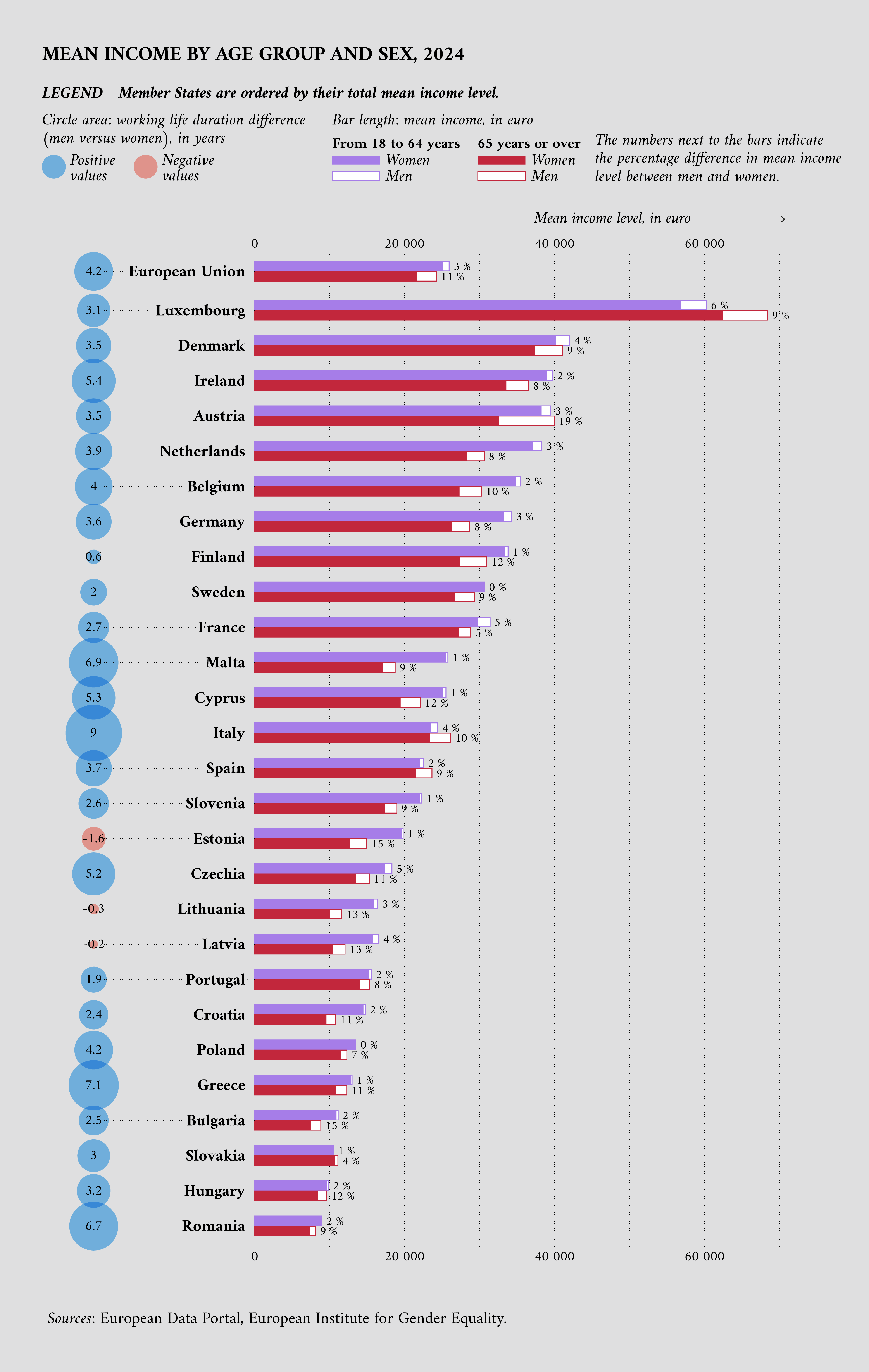
Figure 3: Mean income levels by age group and sex in the EU
Sources: European Institute for Gender Equality, European Data Portal.
Overall, the data underlines the long-term consequences of unequal pay and career patterns. This reinforces the need for structural solutions that address income inequality at its roots.
Conclusion
The data reveals a Europe where progress towards gender equality is real but uneven.
Women participate more in paid work than in the past, yet gaps persist in who does unpaid care work and who shapes key decisions. These differences accumulate over time, with modest income gaps and higher rates of part-time work among women translating into lower pensions later in life.
The picture varies across Member States, but the underlying patterns are consistent: when opportunities, time and influence are not shared equally, men and women do not enjoy the same outcomes in daily life.
By making these inequalities visible, open data helps clarify where change is most needed and supports efforts to build a Europe where men and women can participate, progress and age on equal terms.