
Artificial intelligence in Europe: how AI is entering everyday life
Insights on generative AI use by individuals, AI adoption by businesses and European attitudes towards the technology
Have you used artificial intelligence today?
From writing emails to generating images, AI tools are rapidly becoming part of everyday life across Europe. As adoption spreads across societies and economies, understanding how the technology is actually being used and experienced matters more than ever.
Using open data from Eurostat and Eurobarometer, this data story explores how AI is being adopted across the EU by individuals and businesses, and how Europeans perceive its impact on society.
How are Europeans using generative AI tools?
Generative AI tools allow users to create text, images and other content on demand. Their uptake among European citizens has been rapid; yet use remains far from uniform across age groups and Member States (see Figure 1).
On average, 32.7 % of Europeans reported having used generative AI tools in the last three months; yet this figure conceals stark differences. Usage is highest among young people aged 16 to 24, with 64 % having used such tools, compared with 33 % among those aged 25 to 64 and only 7 % among people aged 65 to 74.
The country-level picture is equally uneven. Among Member States with the highest uptake, Estonia and Denmark lead for the overall population (around 47 % and 48 % respectively), while Greece, Estonia and Czechia record the highest rates for young people – with more than four in five young people in these Member States using generative AI. Romania and Italy are among the countries with the lowest rates: fewer than 20 % of adults aged 25 to 64, and around half of young people – roughly 25 to 35 % below the leading Member States.
The data also reveals how Europeans use generative AI. Across the EU, around one quarter of individuals across all age groups report using these tools for private purposes in the last three months, such as finding information or supporting everyday tasks. Among people aged 25 to 64, approximately one fifth use generative AI for work-related tasks, reflecting its growing role in the workplace. Generative AI is also widely used in formal education, with roughly 40 % of young people aged 16 to 24 reporting use for learning-related activities.
Taken together, the data points to a technology already integrated into the daily routines of a substantial share of Europeans – with the generation currently in school among its most active and consequential users.
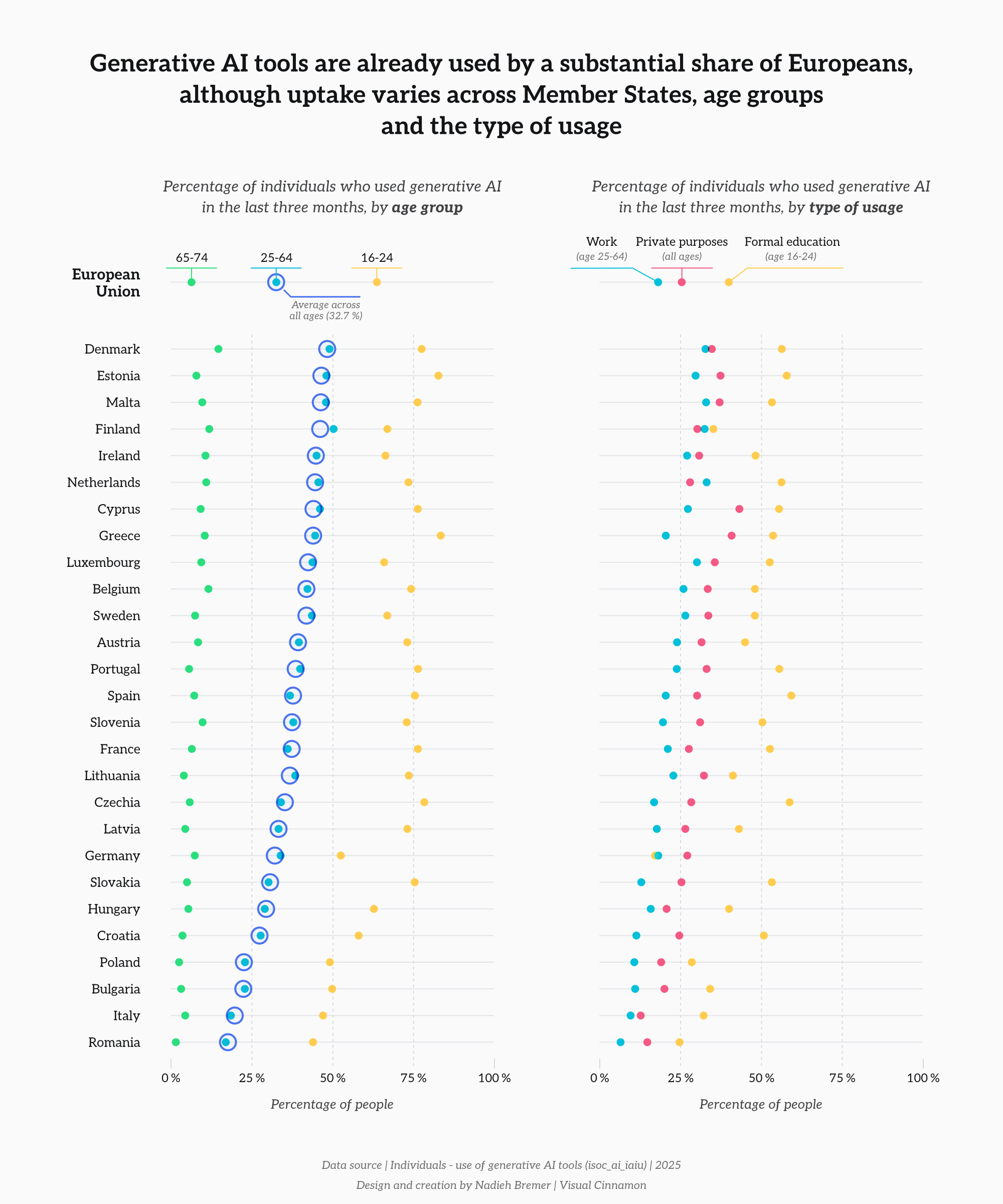
Figure 1: Use of generative AI among individuals in the EU by age group and type of usage
Source: Eurostat / European Data Portal.
Which businesses in Europe are adopting artificial intelligence, and how?
Artificial intelligence is becoming part of how businesses across Europe operate, with adoption (all activities) rising from 7.7 % in 2021 to 20.0 % in 2025; but how is it actually being used?
Figure 2 shows the share of companies using at least one AI technology across different sectors in the EU in 2025. Information and communication leads by a considerable margin, with more than 60 % of companies using AI, including software developers, telecommunications providers and digital platforms. Professional and scientific follow at 40 %, covering activities such as consulting, engineering and research, while electricity and utilities companies also show relatively high adoption at 34 %. At the other end of the scale, sectors such as construction, transportation and storage, and accommodation and food record much lower levels of adoption, generally below 12 %.
The second part of the figure highlights how businesses are using AI. Around 12 % of companies use AI for text mining, for example to analyse written content. Generative media creation, such as images, video or audio, is also relatively common at 10 %. Text, speech and code generation are similarly widespread at 9 %, supported by large language models (LLMs) that help automate writing, coding and communication. The sectors leading in overall adoption also tend to deploy a wider range of AI applications simultaneously – combining text mining, generative media and language tools – while lower-adoption sectors, where they use AI at all, typically rely on a single application type.
Overall, AI adoption in EU businesses remains concentrated in digital and knowledge-intensive activities. For now, AI adoption in European businesses remains concentrated in knowledge-intensive and digital sectors. But the pace of change since 2023 – more than doubling in just two years – suggests the expansion is already well under way.
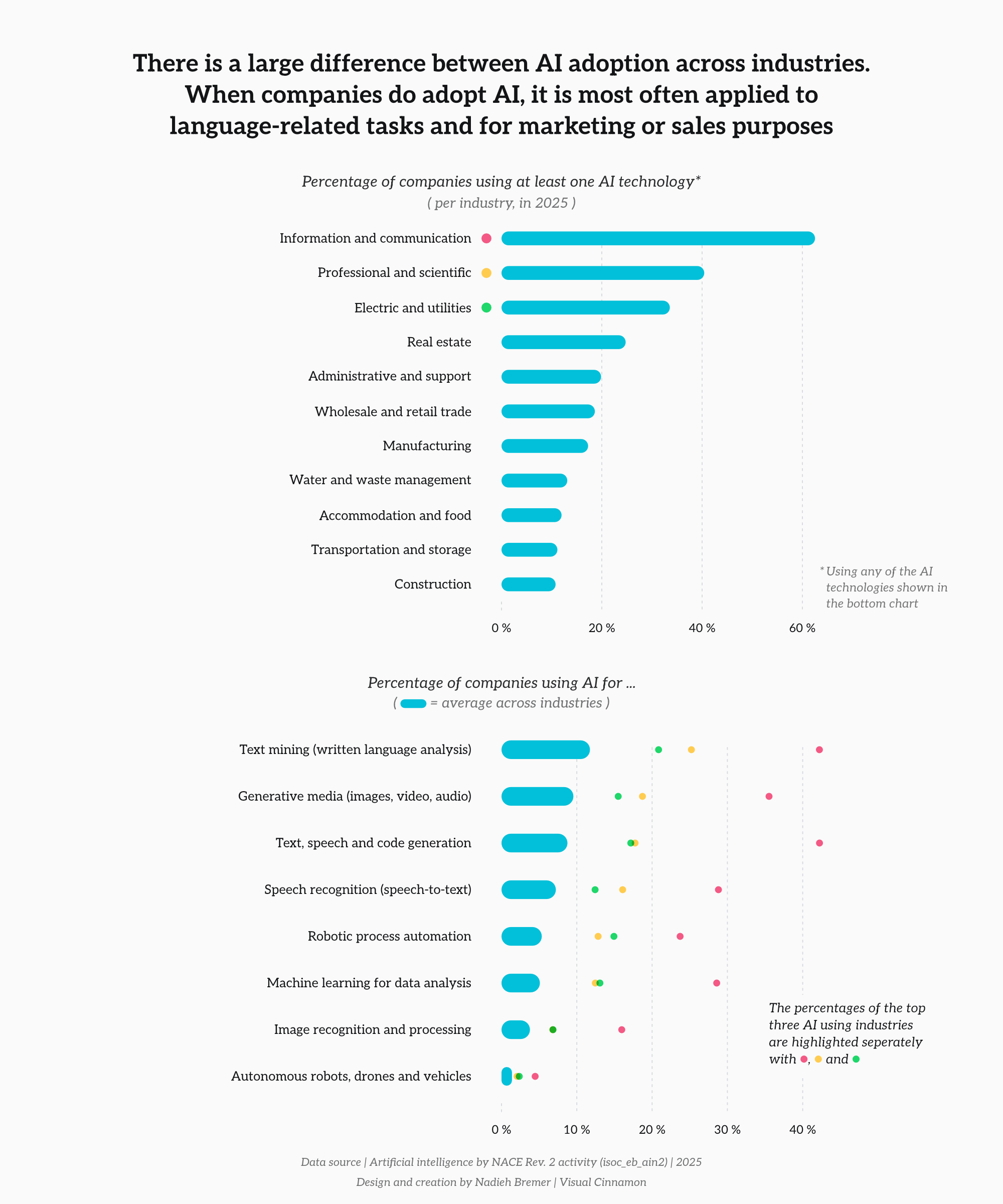
Figure 2: AI use by companies by industry and application type in the EU
Source: Eurostat / European Data Portal.
How do Europeans perceive artificial intelligence and its impact on society?
As AI becomes more common in workplaces, schools and everyday activities, an equally important question emerges: how do Europeans feel about this transformation?
Figure 3 explores how Europeans view AI and robots in the workplace. The results show a degree of caution, particularly regarding employment. Two thirds of respondents agree that AI and robots steal people’s jobs, and a similar share believes that AI could lead to more jobs disappearing than being created (66 %). At the same time, Europeans recognise the practical benefits of the technology. Around two thirds agree that AI is useful for carrying out boring or repetitive tasks, and more than 70 % believe that AI and robots improve workplace productivity – the survey’s most positive finding on the topic.
Views are more mixed when it comes to decision-making: although many respondents (53 %) believe AI can support accurate decisions in the workplace, a substantial share (38 %) remains sceptical.
The picture changes markedly when the survey shifts from AI specifically to digital technologies more broadly – a category that encompasses smartphones, the internet, cloud tools and AI. A clear majority of 62 % of respondents believe these technologies have a positive effect on the economy, with a similar share (62 %) expressing positive views on quality of life. When it comes to the impact of digital technologies on people’s jobs, 50 % of the answers are positive. Meanwhile, neutral responses (30 %) are relatively common, indicating that many Europeans are still uncertain about how technologies like AI may affect their professional lives.
The pattern is consistent: Europeans accept AI’s contribution to the economy and everyday life; yet remain anxious about what it means for jobs.
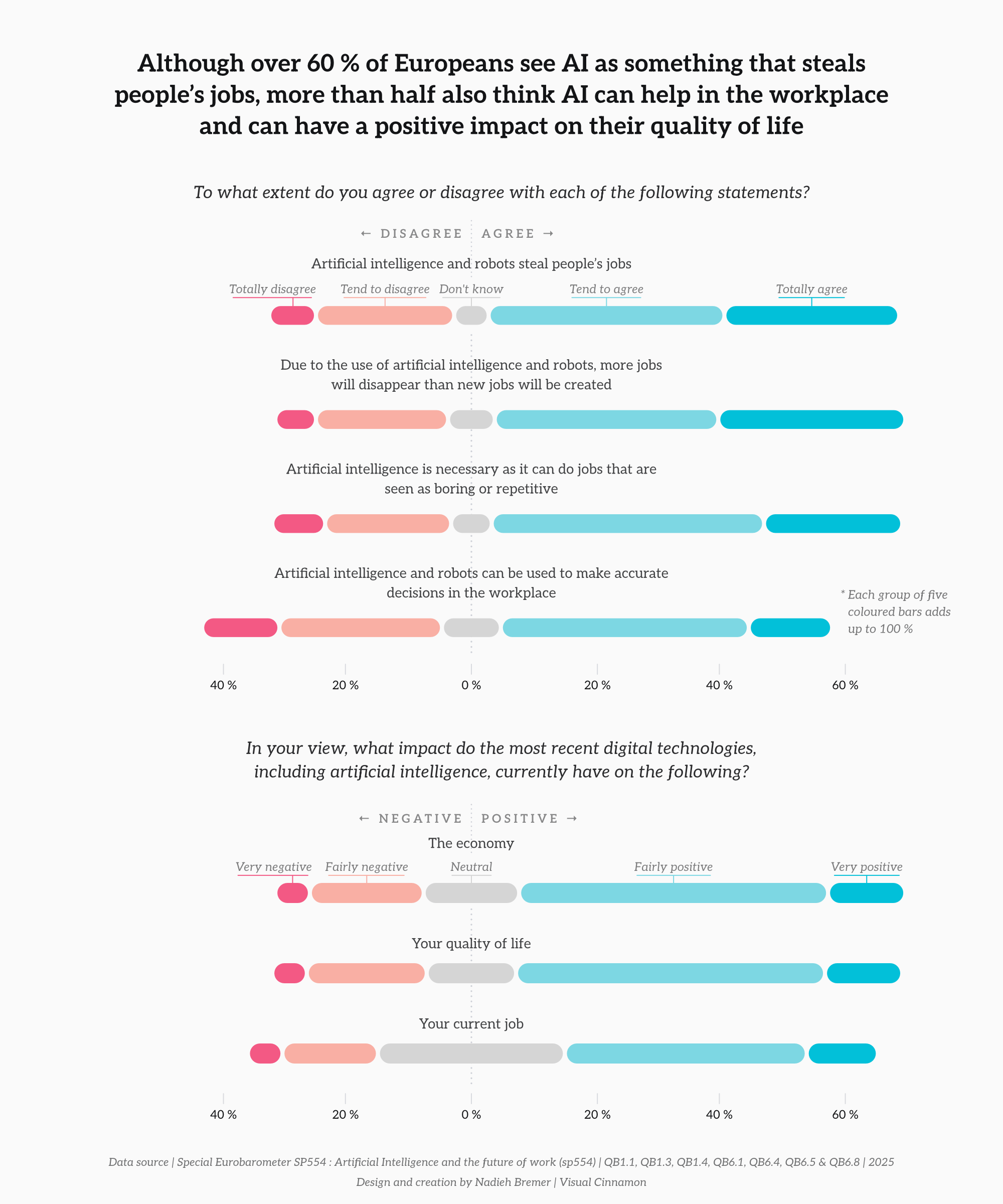
Figure 3: Public perceptions of artificial intelligence and digital technologies in the EU
Source: Eurobarometer / European Data Portal.
Conclusion
AI is becoming an increasingly visible part of everyday life across Europe. The open data tells a clear story, but not a simple one. Across Europe, AI is spreading quickly – in classrooms, workplaces and everyday tasks – but unevenly. Young people are far ahead of older generations. Knowledge-intensive industries are far ahead of construction, food and transport. And public opinion, while broadly positive about digital technology’s effects on the economy and quality of life, remains deeply cautious about employment.
These are not independent trends. The workplaces and industries where AI is most actively used are also those most exposed to its disruptive potential. Young people who have grown up using AI in education will soon bring those habits into the workforce. The recent surge in business adoption – from 8.1 % in 2023 to 20 % in 2025 – suggests the landscape is changing faster than public attitudes have had time to catch up with.
The gap between high-adoption and low-adoption countries – visible both among individuals and among businesses – raises an open question about whether the benefits of this transformation will be distributed evenly across the EU. Open data makes it possible to track these patterns in real time. The figures presented here are a snapshot – one that will look very different by the time the next survey cycle is complete.