
Social media use in the EU: From countries to generations
How individuals, businesses and age groups differ in how they access and engage with information
When did you last check your mobile phone? Chances are high that social media was involved. And you are not alone.
Scrolling through, sharing and reading the news, or simply filling a spare moment has become part of the daily routine for many EU citizens. What began as a way to stay in touch with friends has grown into a space where information spreads, opinions form and organisations connect with millions of people.
But how widely is social media actually used, and does this look the same across the EU? Drawing on open data, this data story explores how citizens and businesses use social media across Member States and age groups.
Social media use rises across the EU, with businesses reaching similar levels to individuals
Social media use has increased steadily across the EU over the past decade, among both individuals and businesses. As shown in Figure 1, the gap between the two groups narrowed rapidly up to around 2020, when businesses reached similar levels of use as individuals. Since then, usage has remained broadly comparable, with only small differences in recent years.
In 2015, 48 % of EU citizens reported using social media, compared with 37 % of businesses. By 2025, these shares had risen to 67 % and 64 %, respectively.
Across Member States, however, usage levels vary considerably. Among individuals, Denmark reports the highest share (90 %), while Italy records the lowest (56 %). Differences are even more pronounced for businesses, ranging from 88 % in Malta to 42 % in Bulgaria.
Despite these differences, a clear pattern emerges: Member States with high levels of social media use among individuals tend to show similarly high uptake among businesses. Denmark, Finland and Malta consistently show the highest levels of social media use among both citizens and businesses, suggesting that broader digital cultures shape social media uptake across society as a whole. However, some exceptions also appear. In Romania, for example, 80 % of individuals report using social media, compared with 48 % of businesses.
Taken together, the data shows that social media has become an established part of life in the EU. It now forms part of a broad media environment that shapes how people access and share information.
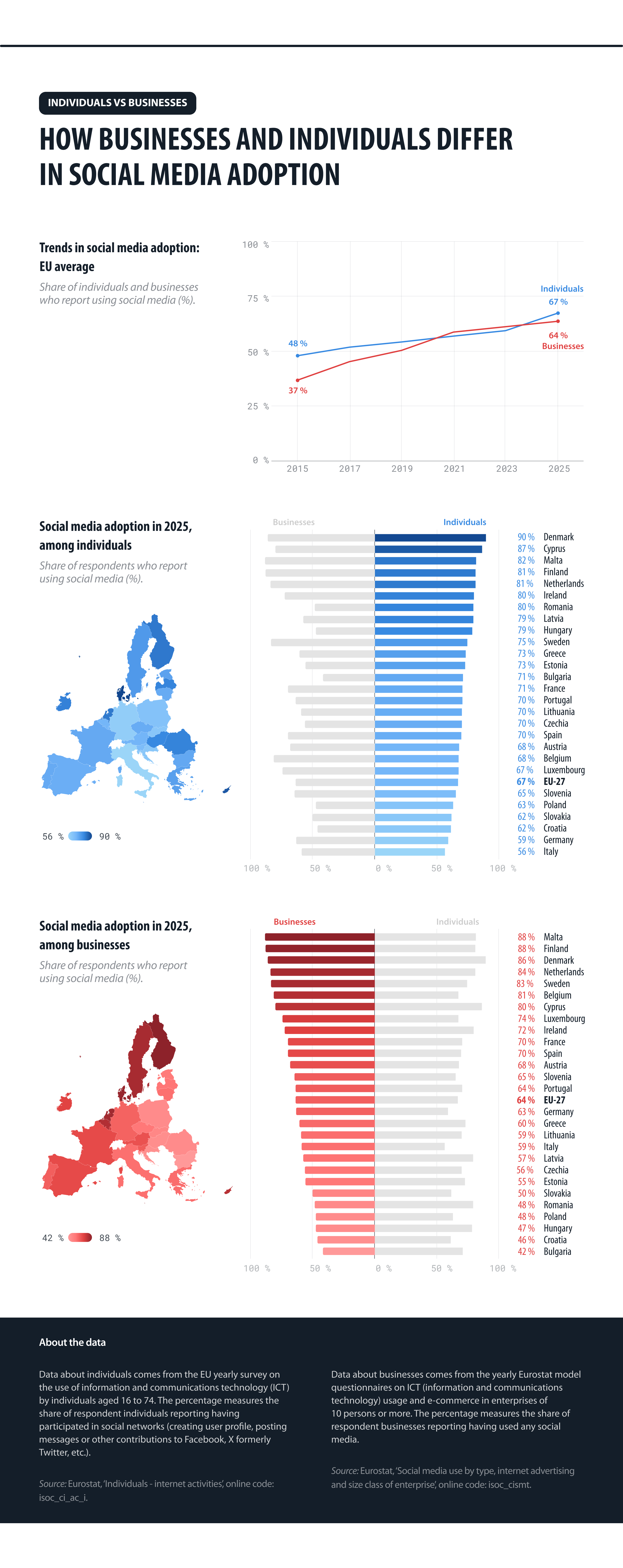
Figure 1: Social media adoption among individuals and businesses in the EU, 2016–2025
Sources: Citizens: Eurostat / European Data Portal; businesses: Eurostat / European Data Portal.
Different media profiles emerge across EU Member States
EU citizens rely on a mix of sources to follow political and social news, and the balance between these sources varies across the EU.
At the EU level, television (TV) remains the most widely used source, reported by 71 % of respondents. Other traditional media such as radio (43 %) and printed newspapers (41 %) also continue to play an important role. At the same time, digital sources are widely used: around 40 % of EU citizens report using social media and search engines to follow the news. Other sources, such as video platforms, podcasts and AI chatbots, are used by smaller shares of respondents.
Looking beyond these averages, different media behaviours can be observed across Member States. One useful way to interpret the data is to group countries with similar patterns of media use, based on the relative importance of each source (Figure 2). This makes it possible to highlight broader profiles and makes these differences easier to compare and understand.
In one group of countries — Belgium, Spain, France, Italy and the Netherlands — traditional sources such as TV, newspapers and radio remain relatively strong, while newer forms of media are used less frequently.
A second group — Denmark, Germany, Estonia, Luxembourg, Austria, Portugal, Finland and Sweden — shows broad media use, combining high consumption of traditional sources with levels of digital media use that are generally around or above the EU average.
A third group of countries – Bulgaria, Czechia, Ireland, Croatia, Poland, Romania and Slovenia – shows increasing use of digital media, particularly search engines and social media, while traditional sources remain important, with the notable exception of printed newspapers.
Finally, in a number of Member States, such as Greece, Cyprus, Latvia, Lithuania, Hungary, Malta and Slovakia, social media stands out as one of the most widely used sources for following political and social news, making it a particularly prominent part of the overall media mix.
These patterns highlight that while similar types of media are used across the EU, the way they are combined differs from one country to another, shaping distinct national media landscapes.
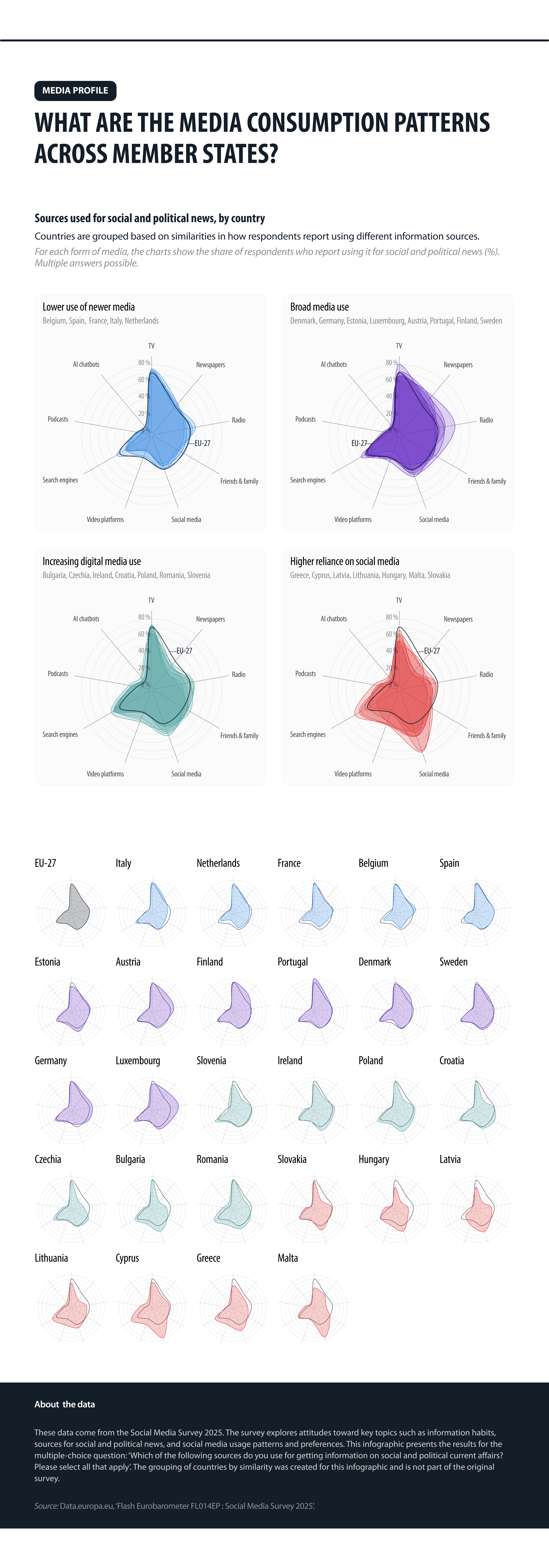
Figure 2: Media consumption patterns for political and social news across EU Member States
Sources: Eurobarometer / European Data Portal.
How social media use and engagement differ across age groups in the EU
Age plays a central role in how EU citizens access and interact with political and social news.
Across generations, there are differences not only in which sources people rely on, but also in platform preferences and levels of engagement (see Figure 3).
As shown in Figure 3, clear differences emerge across age groups in both the sources people use and how they engage with content. Younger EU citizens rely more heavily on social media and other digital sources, while older age groups make greater use of traditional media. Around two thirds of people aged 15–24 report using social media for news, compared with around a quarter among those aged 55+. By contrast, TV use is higher in the older age groups, rising from around half of younger respondents to more than 80 % among the oldest group.
Preferences for specific platforms also vary strongly by age. Instagram and TikTok are most widely used among younger users, but much less used in the older age groups. Facebook shows the opposite pattern, with higher usage among older age groups and being the most widely used platform among people aged 40–54 and 55+.
Differences are also visible in how people interact with political and social content on social media. Across all age groups, most users interact passively, primarily by reading or viewing posts. However, the share of people who do not engage at all increases markedly with age – from 14 % among those aged 15–24 to 41 % among people aged 55+. Active forms of participation, such as commenting or posting original content, remain comparatively limited across all groups.
Taken together, these patterns show that social media plays a different role across generations: younger users rely more on digital platforms and engage more frequently, while older users combine social media with traditional sources and are more likely to remain passive.
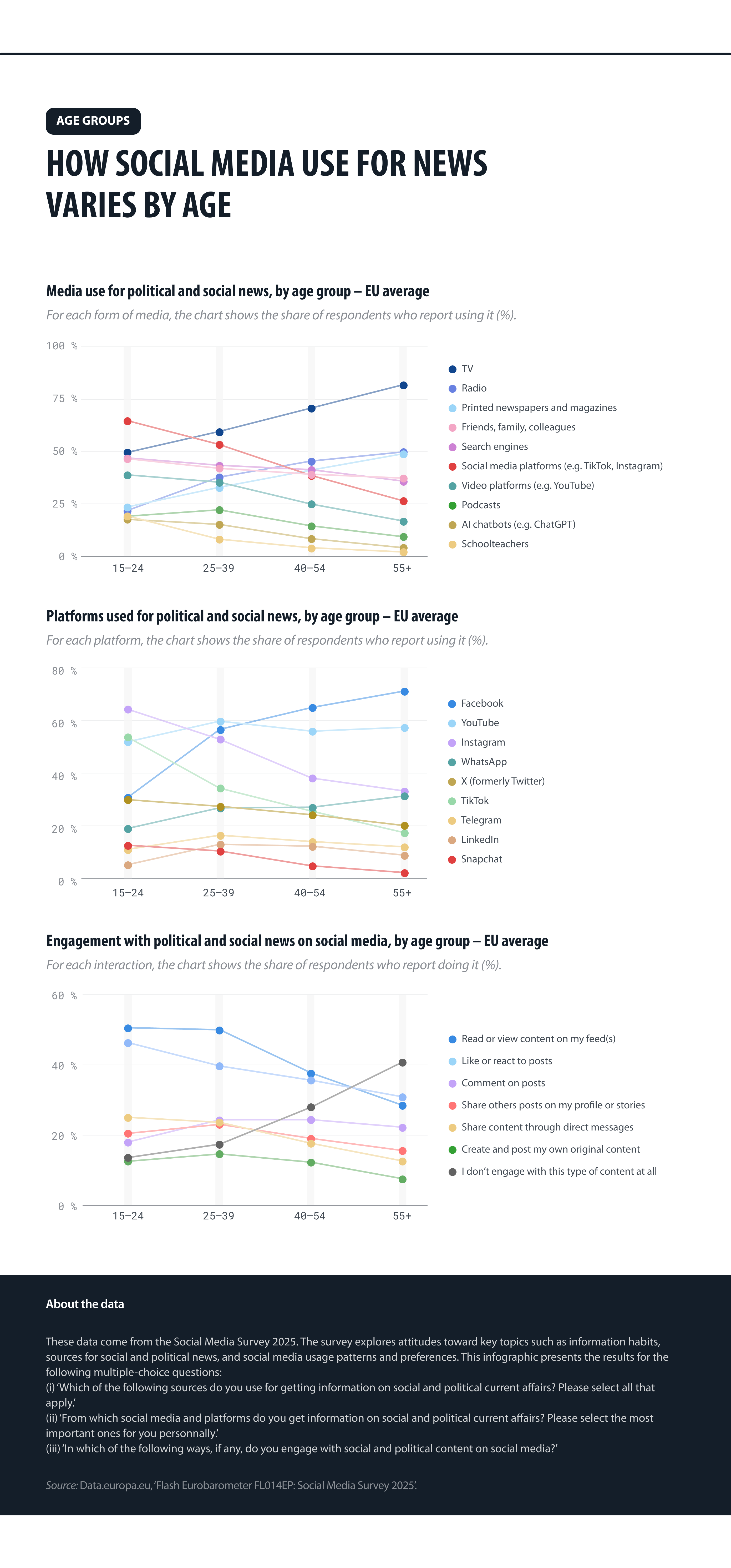
Figure 3: Social media use for political and social news by age group in the EU
Sources: Eurobarometer / European Data Portal.
Conclusion
Social media is now widely used across the EU by both individuals and businesses, with usage levels converging over the past decade. While adoption has increased across the EU, it has not developed uniformly across Member States.
Different profiles of media use can be observed across Member States, reflecting how people combine traditional and digital sources in different ways. Some countries show lower use of newer media, others combine a broad range of information sources, while in others digital channels – particularly social media and search engines – play a more central role.
Age further shapes these patterns. Younger EU citizens rely more heavily on social media and other digital sources, while older age groups make greater use of traditional media. Across all age groups, however, most users engage with content passively, with older users particularly likely not to interact at all.
Overall, social media forms part of a diverse and evolving information landscape in the EU. Open data helps make these patterns visible, offering insights into how people access and engage with information across the EU.