
Cyprus in focus
What can open data tell us about the country currently at the heart of EU decision-making?
What comes to mind when you think of Cyprus? Many see it as a sunny island and a popular tourist destination. It lies at the eastern edge of the Mediterranean, geographically closer to the Middle East than to mainland Europe, while being a Member State of the European Union. It is one of the few EU Member States without electricity interconnections to other Member States, hosts one of the largest merchant fleets in the EU, and has an economy strongly shaped by international flows of goods, services and people.
Cyprus is among the EU’s smaller Member States. In the first half of 2026, it is playing a central role in EU decision-making by holding the Presidency of the Council of the European Union, focusing on competitiveness, resilience and global partnerships. This is an excellent occasion to take a closer look at the country’s economic and social profile.
Using data from Eurostat and the Statistical Service of Cyprus (Cystat), this story explores three key dimensions of Cyprus: what it trades and with whom, how its living standards compare with the rest of the EU, and how tourism links the island to the wider world. Together, these insights provide a data-driven snapshot of a Member State that is both closely integrated into Europe and strongly connected beyond it.
How does Cyprus compare with the rest of the EU in terms of living standards and key indicators?
A country is more than what numbers can capture, but statistics can help us understand where Cyprus stands relative to the rest of the EU. Figure 1 compares Cyprus with the EU across selected indicators that reflect living standards and broader socioeconomic conditions.
With just under 1 million inhabitants, Cyprus is one of the EU’s smaller Member States, with only Malta and Luxembourg having smaller populations.
In terms of health, Cyprus records higher life expectancy than the EU average, at around 83.5 years: around two years above the EU average of 81.5. Healthy life years are also higher (65 versus 63.1), indicating that people in Cyprus tend to spend more years without long-term limitations for activity.
Looking at social conditions, the share of people at risk of poverty or social exclusion is lower than the EU average. In 2024, around 17 % of the population in Cyprus was at risk, compared with about 21 % across the EU.
Income levels, measured in gross domestic product (GDP) per capita, remain below the EU average (EUR 30 590 compared with EUR 34 110 in 2025). However, when measured in purchasing power standards, the gap is much smaller. Provisional figures for the same year show a difference of around two percentage points between Cyprus and the EU average, highlighting the role of differences in price levels.
Finally, the share of renewable energy is also somewhat lower in Cyprus, at 20.8 % compared with the EU average of 25.2 %, highlighting differences in the structure of energy systems across the EU.
Taken together, these indicators show that Cyprus, geographically an island at the eastern edge of the Mediterranean, shares many of the EU’s overall patterns and performs strongly on indicators that matter to people’s daily lives, with some variability that, as for every Member State, reflects its specific economic and structural characteristics.
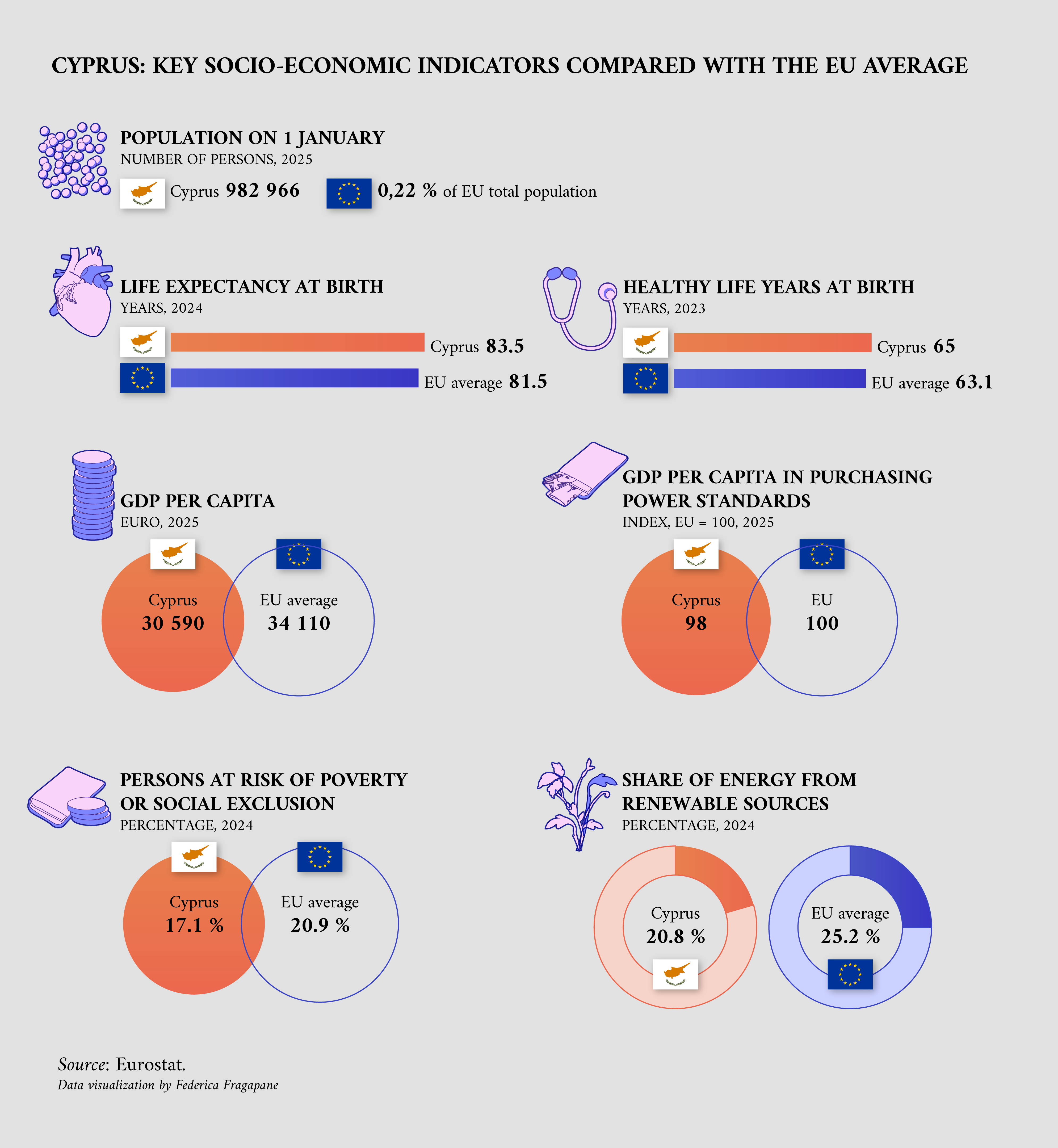
Figure 1: Cyprus socioeconomic indicators compared to the EU average
Sources:
- life expectancy: Eurostat / European Data Portal;
- population: Eurostat / European Data Portal;
- healthy life years: Eurostat / European Data Portal;
- persons at risk of poverty or social exclusion: Eurostat / European Data Portal;
- gross domestic product per capita: Eurostat / European Data Portal;
- share of energy from renewable sources: Eurostat / European Data Portal.
Cyprus trade: what it exports and who it trades with
Trade plays a central role in Cyprus’s economy, reflecting its geographical position and strong links with both European and international markets (see Figure 2).
In 2025, Cyprus exported goods worth around EUR 5.6 billion and imported around EUR 13.9 billion. Exports are concentrated in a limited number of product categories. Mineral fuels account for the largest share, at around EUR 2.3 billion (about 42 % of total exports). Other key export products include dairy products (including halloumi, the island’s iconic cheese) and pharmaceutical products, each contributing around EUR 0.4 billion.
Imports show a similar concentration, with mineral fuels again dominating at around EUR 3.6 billion (26 % of total imports). Cyprus is therefore both an exporter and an importer of mineral fuels. It imports significant quantities of fuel products for domestic energy needs, shipping activities and re-export to neighbouring countries, which helps explain why mineral fuels appear prominently in both imports and exports. Other major import categories include motor vehicles, ships and boats, reflecting both domestic demand and the role of maritime activities in the Cypriot economy.
A look at trade partners shows how Cyprus is connected to different regions. Its main export destinations include Libya, Lebanon, Israel, the United Kingdom and Egypt, while imports are more strongly linked to the EU, with Greece as the largest EU supplier, followed by Italy and Germany, alongside global suppliers such as China and Saudi Arabia.
These patterns reflect an economy that is closely integrated into European supply chains while maintaining strong trade links with neighbouring regions. At the same time, a significant share of trade is linked to fuel products, which influences both the structure and the geographic distribution of trade flows.
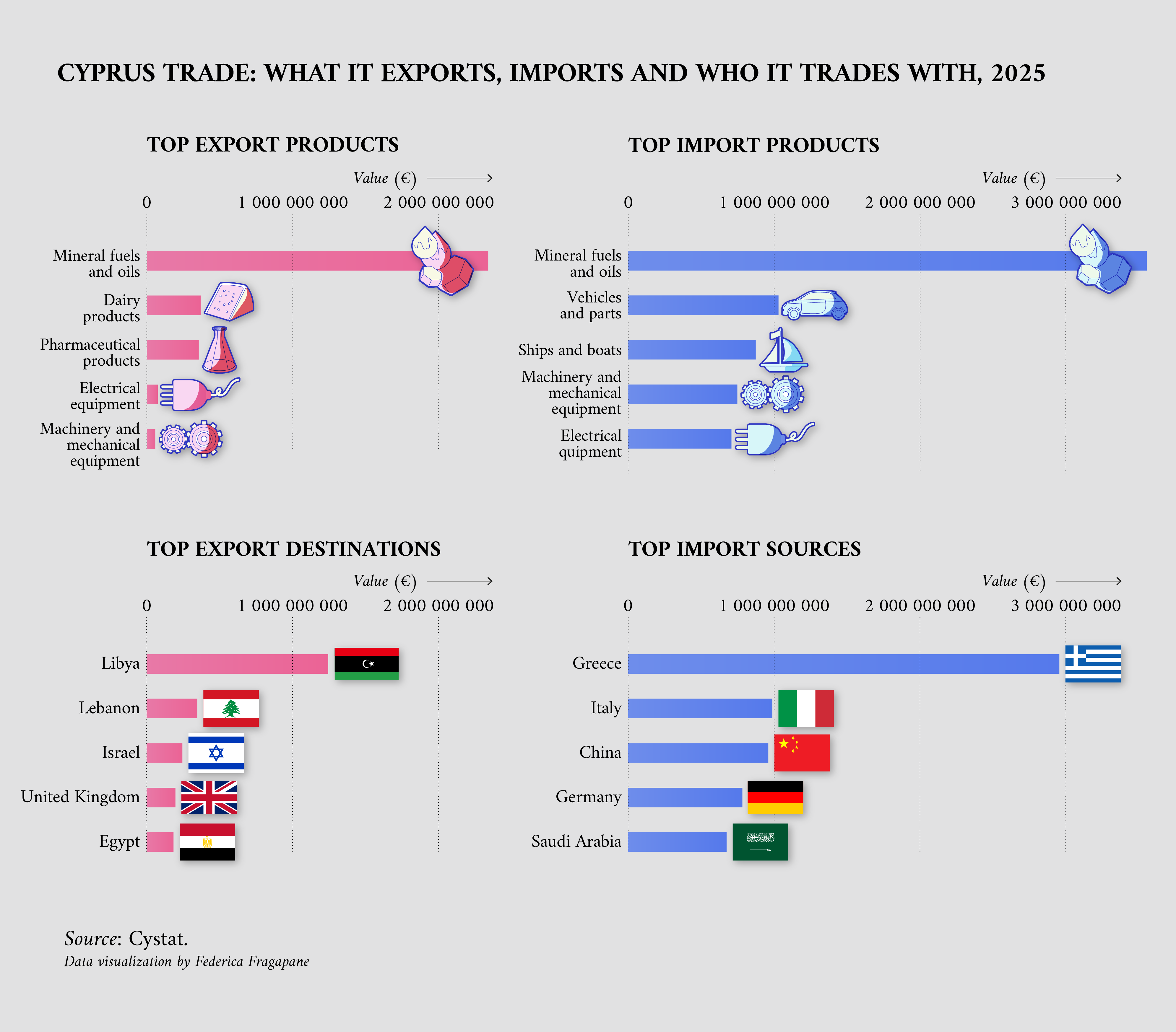
Figure 2: Top export and import products and trading partners of Cyprus, 2025
Sources:
- exports: Cystat / European Data Portal;
- imports: Cystat / European Data Portal.
Tourism in Cyprus: who visits and how it has evolved
Cyprus is a well-established tourist destination in the eastern Mediterranean, known for its warm climate, coastline and rich culture. Figure 3 provides an overview of where tourists come from, how arrivals have evolved over time and how they are distributed throughout the year.
The United Kingdom is the largest source of visitors, with around 1.4 million arrivals in 2025. It is followed by Israel, with around 600 000 visitors. The remaining top ten consists largely of EU Member States, with Poland, Germany and Greece being the main source countries, highlighting the importance of the European travel market for Cyprus’s tourism.
Tourism to Cyprus has grown significantly over time. Annual arrivals increased from around 350 000 in 1980 to over 4.5 million in 2025, a more than twelvefold increase. While this growth includes periods of slowdown, including a sharp decline during the COVID-19 pandemic, the overall trend has been upward.
Tourism is also highly seasonal. Nights spent in tourist accommodation are concentrated in the summer months, with July, August and September accounting for around 56 % of the annual total. In contrast, the winter months (November, December and January) account for just around 7 % of annual tourist arrivals.
These patterns show that tourism in Cyprus is both concentrated in a limited number of source countries and strongly shaped by seasonal demand.
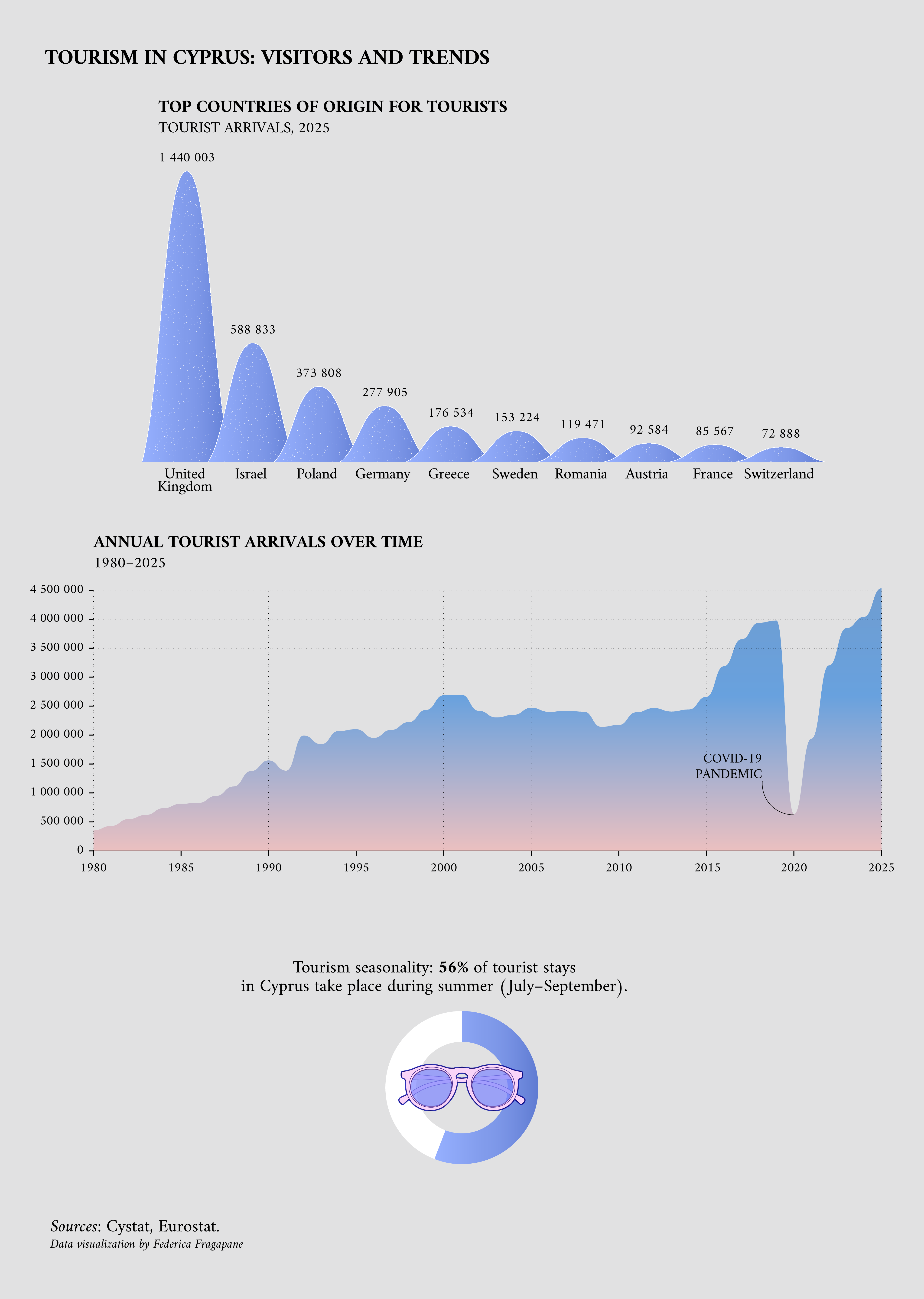
Figure 3: Tourist arrivals in Cyprus by source country and over time
Sources: Cystat / European Data Portal.
Sources: Eurostat / European Data Portal.
Conclusion
As Cyprus holds the Presidency of the Council of the European Union, open data offers a timely opportunity to look beyond its institutional role and better understand the country itself.
The data shows a small, outward-looking Member State whose economy is strongly shaped by international flows. Its trade is concentrated in a limited number of products and markets, while tourism depends heavily on a few major source countries and follows a clear seasonal pattern.
At the same time, Cyprus shares many of the EU’s overall patterns in areas such as health, income and social conditions, with differences reflecting its particular geography, economic structure and energy context.
While some of these features are specific to Cyprus, all EU Member States display their own distinct characteristics alongside shared patterns. Together, they reflect the diversity that underpins the EU. As this story illustrates for Cyprus, open data can help reveal broader economic and social patterns across all EU Member States and other European countries through national data portals and the European Data Portal, which offers a central access point to such information.