
830 résultats trouvés
Skip results of view Actualités
On 27 October 2022, the data.europa academy held a webinar on the topic ‘ Trends in Geospatial data `. The aim of the webinar was to investigate current emerging trends in the geospatial community and discuss which trends, standards, or ideas are most relevant today. This should eventually facilitate the identification of further opportunities for data.europa.eu. After a brainstorming session on current trends in geospatial community, the webinar went on to discuss two interesting topics for future of data.europa.eu, modernising Infrastructure for Spatial Information in Europe (INSPIRE) and
On 14 September 2022 , Ursula Von Der Leyen, President of the European Commission, announced in the annual State of the Union address , her intention to make 2023 the ´European Year of Skills’ to address the current skill shortage in the EU. Currently, in fact, more than three quarters of companies in the EU report difficulties in finding workers with the appropriate skill set. This is even truer when it comes to digital skills, with only 4 out of 10 adults and every third person who works in Europe lacking basic digital skills. Additionally, IT and security specialists are few and the female
To explore the uncharted areas of the world, geospatial data needs to be harvested. But how does the process of geo-harvesting work? This is one of the many questions that will be addressed in the webinar ‘ Geospatial harvesting on data.europa.eu’ that will take place on 29 November at 10.00 – 11.00 CET. This webinar will introduce the geospatial data that can be found on data.europa.eu and explain the geo-harvesting process. The speakers - Jan van Zadelhoff and Antje Kügeler from con terra - will closely examine one geospatial dataset on data.europa.eu and explore the journey of its metadata
On 3 November 2022 it was World Digital Preservation Day (WDPD), an annual event hosted on the first Thursday of every November by the Digital Preservation Coalition (DPC). This is a registered company and charity established in 2002 as a collaboration between several agencies operating in the UK and Ireland, among which research institutes such as CERN and the University of London. The goal of WDPD is to celebrate and raise awareness at global level about all things digital preservation and showcase how Digital Preservation enables ‘digits to flourish’. With digital preservation is meant in
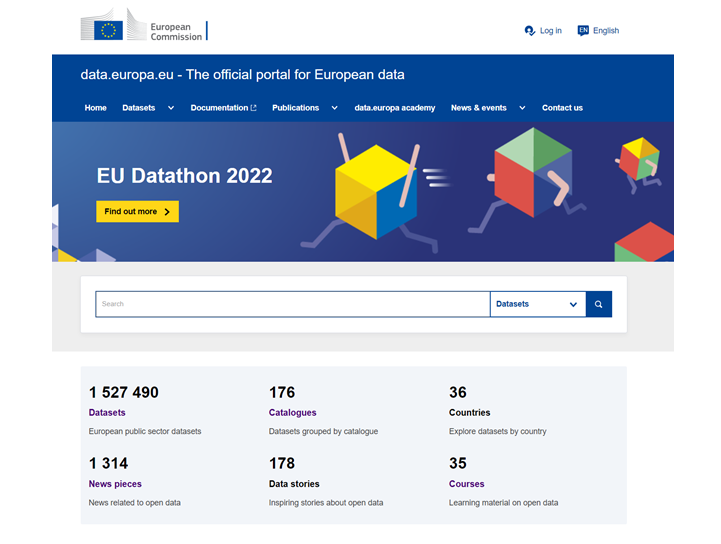
The idea of data.europa.eu is to make data available to everyone in a user-friendly way. It should be accessible from everywhere with every device. That’s why we implemented a new design, which is cleaner and makes the page easier to use. Cleaner design The new design includes: A restructured homepage showing a carousel featuring most relevant items, an overview of the main content types a calendar of upcoming events. A clearer menu structure. Easier to understand labels. Dedicated events pages showing all details about the event: a description, the type of event and how to access it. Thanks
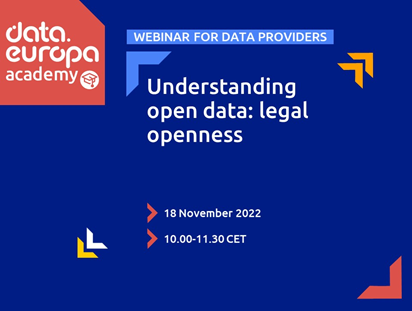
In order to unleash its full potential, data needs to be legally open. What does this openness entail from a legal perspective and how can legal openness be optimally achieved? These will be some of the driving questions of our third webinar for data providers ´Understanding open data: legal openness` , which will take place on Friday, 18 November at 10.00 – 11.30 CET. Organisations and governments use open data licenses to explain the conditions under which their data can be used. Data owners need to take decisions regarding legal openness of their data when making it available to the public
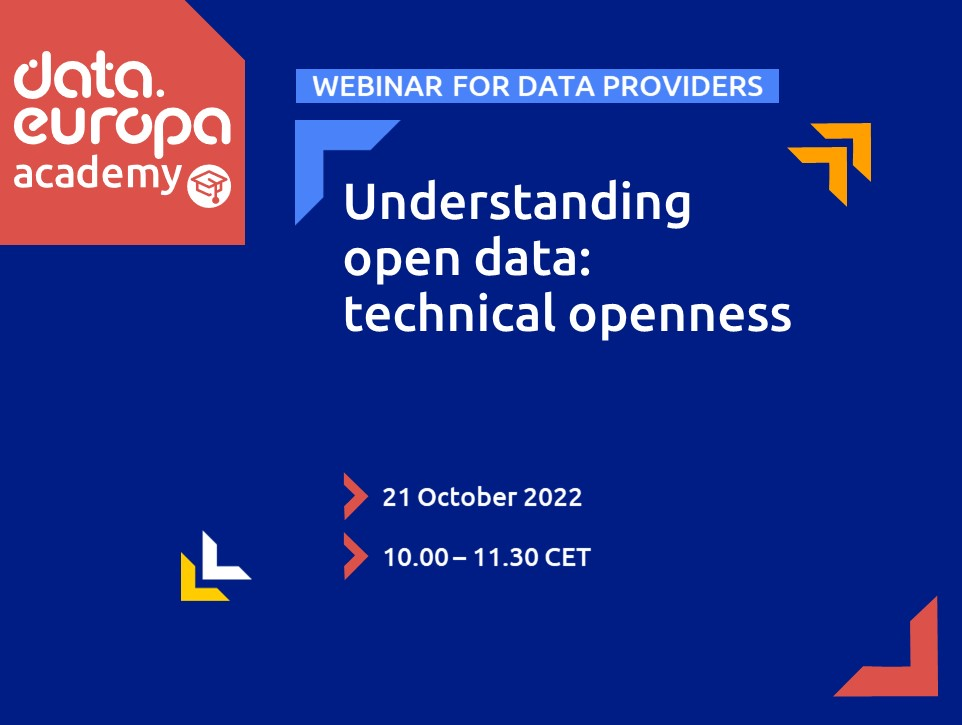
On Friday 21 October, the webinar ‘ Understanding open data: technical openness ’ took place. This webinar was the second of a series of trainings organised by data.europa.eu academy to support data providers in the data publishing process. Specifically, this webinar focused on the need for open data to be technically open, i.e., freely accessible and available in non-proprietary and machine-readable formats. From a technical perspective, openness can also be described according to degrees, following Tim Berners-Lee´s 5-Stars Model , with the first degree meaning that data is available on the
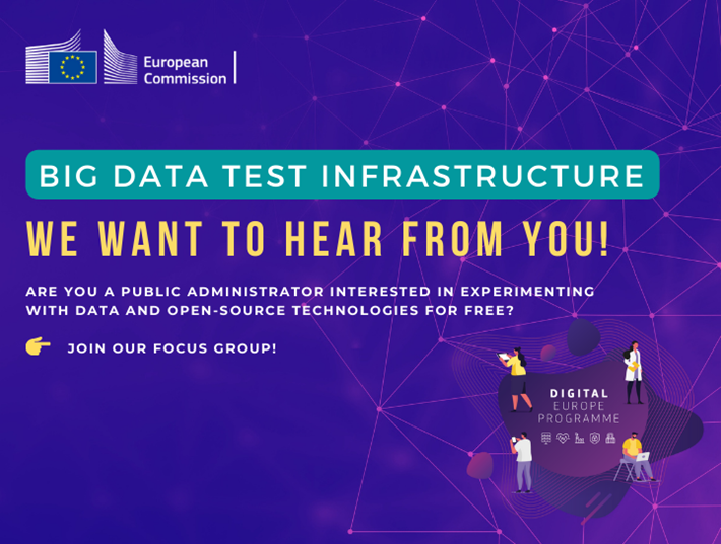
The 'Big Data Test Infrastructure' (BDTI) was created by the European Commission in 2019 and it is part of the Digital Europe Programme (DEP) . With a planned overall budget of €7.5 billion, DEP aims to accelerate the economic recovery and shape the digital transformation of Europe’s society and economy, increasing the availability, quality and usability of public sector information in compliance with the requirement of the Open Data Directive. The Big Data Test Infrastructure (BDTI) is a test platform offered free of charge by the European Commission to European Public Administrations to
On 25 October, the 2022 edition of the European Day of Justice (EDJ) will be celebrated. The aim is to bring justice closer to citizens through a series of activities and events such as open doors, information and training sessions and panel discussions. This allows citizens to be best informed on their rights and to discover the work of the Council of Europe and the European Commission in this regard. The EDJ´s events are open to all EU citizen and are organised with the help of justice professionals, public authorities, international bodies as well as educational institutions across Europe
The 6th edition of EU Datathon, the EU’s open data competition, came to a close on 20 October 2022. The finals took place in Brussels as part of the European Year of Youth and were streamed online to a world-wide audience. We are thrilled to announce the winners! Empowering young people in the job market, reducing greenhouse emissions, and bringing European cultural heritage closer to citizens: these were some of the ambitions put forward by the 12 finalist teams of this year’s EU Datathon. The teams were shortlisted from an initial 156 entries from 38 countries, the highest participation in